


What Is the Screen Door Effect? A Complete Guide
When using a head-mounted display, image quality can make or break the experience. One of the most common visual issues users encounter is the screen door effect.
What Is the Screen Door Effect in Head-Mounted Displays?
The screen door effect is a visual phenomenon where the fine lines or gaps between individual pixels on a display become visible to the human eye.
When a user wears a headset, they see a faint grid or mesh pattern overlaid on the image. This looks remarkably like viewing a landscape through a fine window screen.
The screen door effect is particularly noticeable in head-mounted displays due to the unique viewing conditions they create.
What appears as a smooth, continuous image on a display is actually formed by individual pixels, with small gaps between them. Under many everyday viewing conditions, these gaps are difficult to perceive because the pixel structure remains below the resolving limit of the human eye.
In head-mounted displays, however, the image is viewed in a fundamentally different way. Near-eye viewing combined with magnifying optics projects the display across a wide field of view, increasing the angular size of each pixel in the viewer’s visual field. As a result, the angular resolution — commonly measured in pixels per degree (PPD) — decreases, making the pixel structure easier to resolve.
When a wide field of view is paired with limited resolution, the same number of pixels is distributed over a larger viewing angle, reducing pixels per degree (PPD). With fewer pixels available to represent each degree of vision, pixel boundaries become more visible, appearing as a faint grid or mesh pattern across the image.

How the Screen Door Effect Impacts Headset Viewing Experience
The screen door effect primarily affects overall image quality, which directly shapes how users perceive content inside a headset. When the grid-like gaps between pixels become visible, the image no longer appears smooth and continuous. Fine details lose their sharpness, edges look less clean, and uniform areas such as skies or walls may appear textured instead of solid. This reduction in visual fidelity is the fundamental issue.
Because the display structure becomes noticeable, the realism of the virtual scene is weakened. The brain remains aware that it is viewing a digital image rather than a natural environment, which reduces immersion. Whether simulating a cinema setting or an outdoor landscape, the visible pixel structure interferes with the intended visual depth and smoothness.
Visual distraction is another major drawback. This is especially problematic when watching high-definition movies or reading text.
Small fonts can become jagged or difficult to decipher if the letters fall between the grid lines. This lack of clarity leads to eye strain during long viewing sessions because the eyes are constantly trying to focus on a sharp image that the display cannot quite produce. Even with high-resolution screens, the screen door effect prevents that resolution from looking truly sharp to the end user.
Why Higher Resolution Alone Does Not Always Solve It
A common misconception is that simply increasing the total number of pixels will eliminate the screen door effect. While higher resolution helps, the perceived clarity of a display depends more on display panel, the chosen field of view, and the optical system..
Display technology also sets the foundation for how effectively screen door effect can be suppressed.
Compared to conventional LCD panels, micro-OLED displays are able to integrate a much higher number of pixels into a smaller physical area. This higher pixel density makes it easier to maintain sufficient PPD within the same field of view, reducing the likelihood that pixel boundaries become visible.
That said, even with a high-density panel, an excessively wide field of view can still spread pixels too thin across the visual field. At the same time, a poorly designed optical system can further degrade the overall viewing experience, making existing pixel structure more noticeable. Effective suppression of the screen door effect therefore depends on the display panel, the chosen field of view, and the optical system working together as a balanced whole.
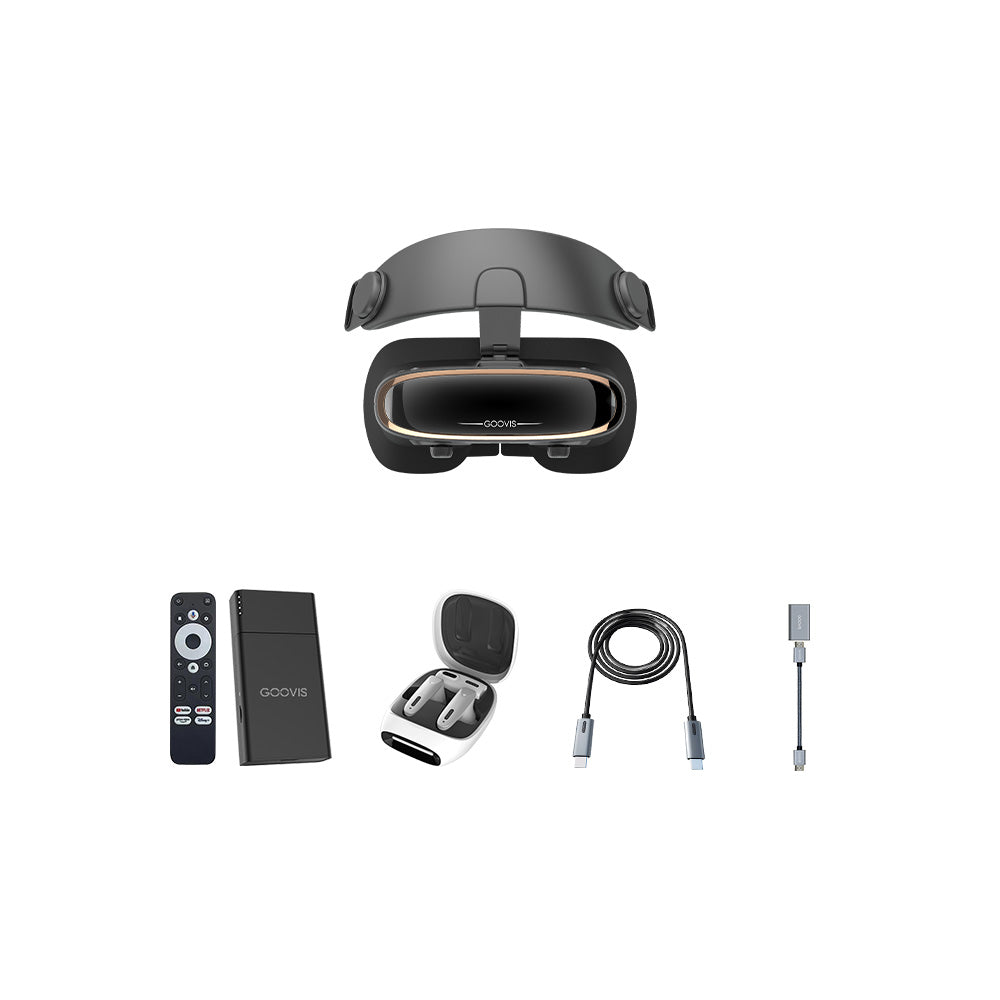
Achieving True Cinematic Clarity: GOOVIS G3 Max
To eliminate the distractions caused by display artifacts, manufacturers have turned to Micro-OLED technology. This technology allows for much higher pixel density and a significantly better fill factor than traditional LCD displays. The GOOVIS G3 Max serves as a prime example of how advanced engineering can virtually eliminate the screen door effect to provide a professional-grade viewing experience.

Advanced Micro-OLED Technology
The GOOVIS G3 Max utilizes two 2.5K Micro-OLED displays, delivering a resolution of 2560 × 1440 per eye. By concentrating this level of resolution into compact Micro-OLED panels, the G3 Max achieves exceptionally high pixel density, laying a solid foundation for clean, finely detailed images.
Building on this foundation, the G3 Max delivers an angular resolution of 45 pixels per degree (PPD), significantly higher than the 20–25 PPD typical of most consumer VR headsets. At this level, it approaches the limits of human visual acuity, making individual pixels and the gaps between them nearly impossible to detect.
To maintain this level of clarity across the entire viewing experience, the G3 Max adopts a carefully balanced 65-degree field of view. This design preserves immersion while keeping pixel density concentrated, avoiding the pixel stretching and loss of sharpness often associated with wider-FOV headsets.
For a consistently sharp experience across different users, the G3 Max also features diopter adjustment from +2D to –7D and an adjustable interpupillary distance range of 58–74 mm. These adjustments help ensure the eyes remain aligned with the optical sweet spot, allowing users to fully experience the precision of the Micro-OLED display and optical system
Experience visuals the way they were meant to be seen—clean, seamless, and free from distracting pixel grids. Discover how GOOVIS G3 Max transforms high-resolution display technology into true cinema-grade clarity for demanding viewers!


