


What is a Head-Mounted Display? Everything You Need to Know
A head-mounted display is a wearable device that places magnified images directly in front of the user's eyes to create a private viewing environment. These devices simulate a large scale virtual screen within a compact form factor.
By utilizing advanced optics and miniature displays, a head-mounted display system can project images that appear as massive virtual screen.
From immersive gaming and virtual training to industrial simulation and remote collaboration, this technology is changing how people interact with digital environments.
How Does a Head-Mounted Device Work
To understand the mechanics of a head-mounted display device, one must look at the integration of three primary technical components. These elements work in harmony to trick the human brain into perceiving a vast digital landscape from a small wearable unit.
Micro Displays: The Engines of Light
The first key component of a head-mounted display is the micro display.
Because an HMD is worn on the head rather than positioned across a room, it cannot rely on large conventional panels such as those used in televisions or desktop monitors. Instead, it uses compact display modules designed specifically for near-eye applications.
Depending on the system design, HMDs may use LCD or OLED-based micro displays. Among these technologies, micro-OLED has become increasingly important in advanced systems due to its high pixel density, strong contrast performance, and ability to maintain image quality within a very small form factor.
Regardless of the display technology used, these micro displays pack millions of pixels into a limited physical area, forming the image source that is later shaped and presented to the user through the optical system.
Optical Engines: The Core of the HMD Experience
If the micro display provides the image source, the optical system is what truly defines the head-mounted display experience. In practice, it is one of the most critical components in any HMD.
Because the display module is physically small and positioned very close to the eyes, its output cannot be viewed directly in a natural or comfortable way. The role of the optical system is to transform this small display output into a large, viewable visual scene.
Through carefully designed lenses, the optical system enlarges the image, shapes the field of view, and ensures that visual content appears stable and comfortable to watch. The quality of this optical design directly influences perceived screen size, image clarity across the viewing area, and overall visual comfort.
Applications of Head-Mounted Displays
Personal Cinema and Media Viewing
Watching movies and video content is one of the most important applications of head-mounted displays. By positioning the visual content directly in front of the eyes and isolating external distractions, HMDs create a highly focused and private viewing environment.
Instead of relying on physical space, users can experience a large virtual screen regardless of their surroundings. This makes HMDs especially suitable for watching films, streaming content, and 3D videos in environments such as airplanes, bedrooms, or shared living spaces. The consistent viewing angle and immersive visual presentation allow users to concentrate fully on the content, making media consumption more engaging than traditional screens.
Immersive Gaming
Gaming is another major use case for head-mounted displays. By placing the visual content directly in front of the eyes, HMDs allow players to feel as if they are inside the game world. This level of immersion enhances gameplay, improves spatial awareness, and makes virtual environments feel more realistic.
Professional and Industrial Applications
Beyond entertainment, head-mounted displays are increasingly used in a range of professional fields. In medical environments, HMDs allow surgeons or clinicians to access imaging data or procedural guidance in a head-mounted, view-aligned format. In unmanned systems and remote operations, they serve as real-time visual interfaces for drones, robots, and other equipment.
HMDs are also applied in industrial inspection and technical support, where workers can view schematics, live camera feeds, or system data while keeping their hands free.
Limitations of Standard Head-Mounted Displays
While head-mounted displays provide a unique and immersive viewing experience, many conventional HMDs still face several limitations:
Limited Image Clarity
In many standard HMDs, overall image clarity is constrained by the quality of the optical system rather than simply the display resolution. Designing optics for a head-mounted form factor is technically demanding. If the lenses are not precisely engineered, issues such as edge blur, uneven sharpness across the viewing area, or reduced detail perception can occur.
As a result, even when a display panel has high pixel density, the final image seen by the user may not fully reflect that capability. This is why optical performance plays a decisive role in determining how clear and natural the visual experience feels in a head-mounted display.
Restricted Comfort for Long Use
Many headsets are bulky or unevenly balanced, causing discomfort during extended sessions. Inadequate weight distribution, insufficient padding, or poor heat dissipation can make long-term use tiring.
Limited Personalization
Many conventional headsets do not adequately accommodate different eyesight needs or allow easy adjustments for users who wear glasses. This can compromise visual comfort and clarity.
These challenges highlight the need for advanced solutions that combine optical precision, ergonomic design, and customization—qualities exemplified by GOOVIS head-mounted displays.
GOOVIS: The Best Head-Mounted Display Glasses
When looking for the gold standard in this industry, GOOVIS stands out by prioritizing optical precision and eye health.

The GOOVIS G3 Max Experience
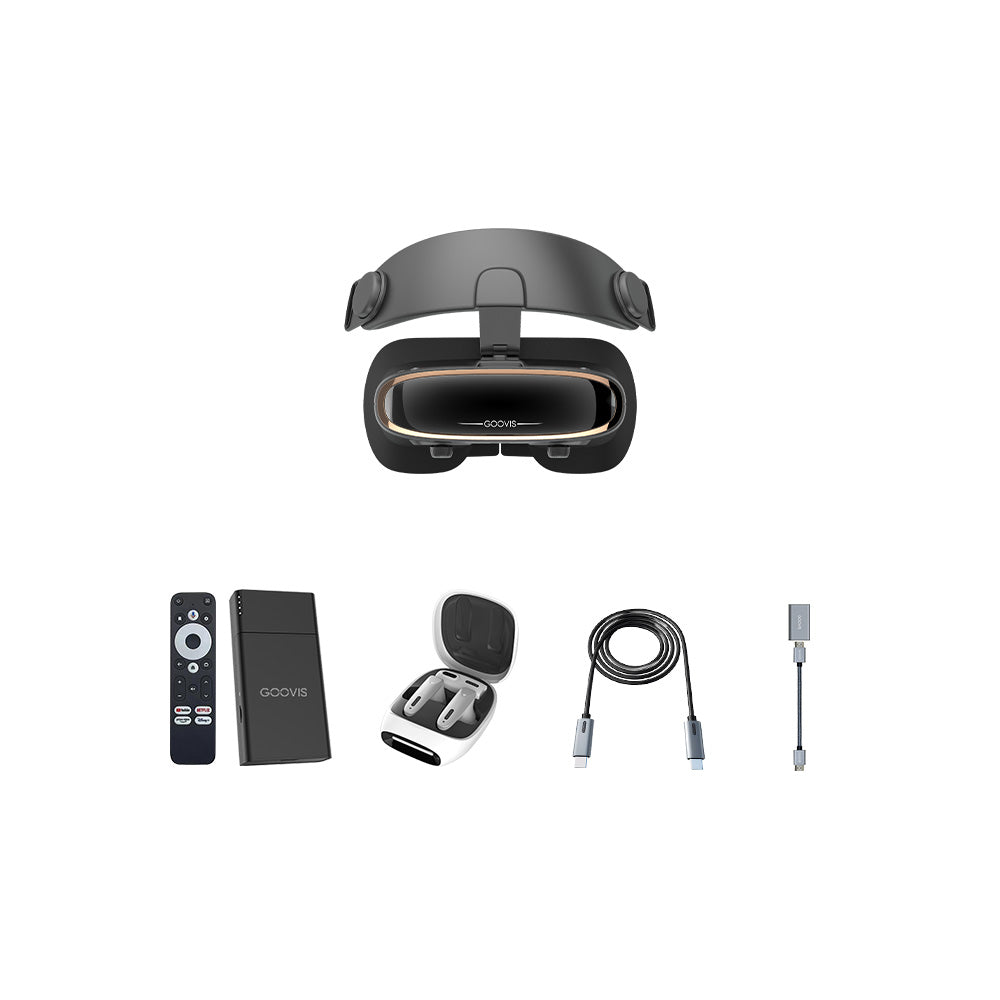
The GOOVIS G3 Max represents a peak in head-mounted display technology, delivering a flagship viewing experience designed for cinema enthusiasts and users who demand uncompromising visual quality.
Human Eye–Level Clarity
Combining a self-developed, SLR-grade optical system with ultra-high-resolution micro-OLED displays, the G3 Max is engineered to deliver exceptional image precision. With an angular resolution of 45 PPD, image detail reaches a level where individual pixels are no longer perceptible, resulting in a smooth, natural, and highly lifelike picture.
IMAX-Grade Immersion
The system simulates a massive 1000-inch display at a viewing distance of 20 meters, delivering a wide 65°FOV that creates a strong sense of scale and cinematic presence without sacrificing clarity.
True 3D Cinema Experience
With support for Blu-ray 3D and side-by-side 3D formats, the G3 Max brings full stereoscopic content to life. Paired with its high-clarity optical system and micro-OLED image quality, it delivers a deeply immersive 3D viewing experience that closely mirrors the depth and realism of a dedicated cinema setup.
Vision Customization
A precise diopter adjustment range from +2D to –7D allows most users to achieve accurate focus directly through the headset, eliminating the need to wear prescription glasses during use.

The GOOVIS Art for Portable Productivity
For users who need to stay aware of their surroundings while working or viewing content, GOOVIS Art offers a versatile, open-view alternative.
Ultra-Light Portability
Weighing just 110 g, this foldable head-mounted display is designed for high portability and long-term comfort, making it suitable for travel, mobile work, and extended viewing sessions.
Open-View Design
Industry-innovating open-view structure allows users to maintain peripheral awareness of their physical environment while viewing a virtual 110-inch display at a viewing distance of 4 meters.
Clear Text and Detail Rendering
GOOVIS Art is optimized for clear text and fine detail reproduction, supporting productivity tasks and professional software use where readability is essential.
Comfort for Glasses Wearers
With built-in diopter adjustment and an open-view design, the GOOVIS Art accommodates a wide range of users, including those who prefer to wear their own prescription glasses during use.
To learn more about these innovative products and to find the best model for your lifestyle, please visit the official GOOVIS website. Discover how an HMD display can transform the way you watch movies, play games, and work on the go!


