



Feeling Dizzy in VR? Understanding Cybersickness
Imagine putting on a high-end virtual reality headset for the first time. The digital world is vast and the graphics are stunning. However, after only a few minutes of exploration, your stomach begins to turn and the room starts to spin.
This experience is common for many enthusiasts who find their digital adventures cut short by physical discomfort. Understanding the root of this problem is the first step toward enjoying immersive technology. This phenomenon is known as cybersickness, a condition that continues to affect how people interact with virtual environments.
What Is Cybersickness?
Cybersickness is a form of motion sickness that occurs during or after exposure to a virtual environment. While it shares many similarities with traditional motion sickness, such as the nausea felt in a moving car, its origin is entirely virtual. The body is often stationary while the eyes perceive significant movement.
This disconnect creates a variety of physical reactions. Users often report a specific set of cybersickness symptoms that can last anywhere from a few minutes to several hours. These commonly include:
l General dizziness and a loss of balance
l Nausea or stomach discomfort
l Severe eye strain and blurred vision
l Headaches or a sense of head heaviness
l Cold sweats and general fatigue
Why Does VR Make Some People Feel Dizzy?
Understanding why VR makes some people feel dizzy requires a closer look at the technical limitations of traditional hardware.
Vergence–Accommodation Conflict
This is the most significant factor.
Most standard headsets create a struggle between vergence, which is where the eyes point, and accommodation, which is how the eyes focus on a distance. Because the physical screen is only inches from your face, your eyes are forced into an unnatural behavior to maintain the illusion of depth.
This constant micro-adjustment of the eye muscles is what causes the intense fatigue and motion sickness associated with prolonged use.
Other Technical Factors
l Artificial Movement: Using a controller to move through a virtual environment while your body remains still creates a sensory gap.
l Latency and Synchronization: Even a tiny delay between your head movement and the image update can trigger immediate nausea.
l Excessively Wide Field of View: While a massive field of view is immersive, it increases the perception of motion in your peripheral vision, which amplifies sensory conflict.
l Frame Rates: Low refresh rates cause images to jitter, making it harder for the brain to process the visual data smoothly.
These limitations are common in traditional systems designed for spatial simulation. For many users, the only way to find relief has been to take frequent breaks or stop using the technology altogether.

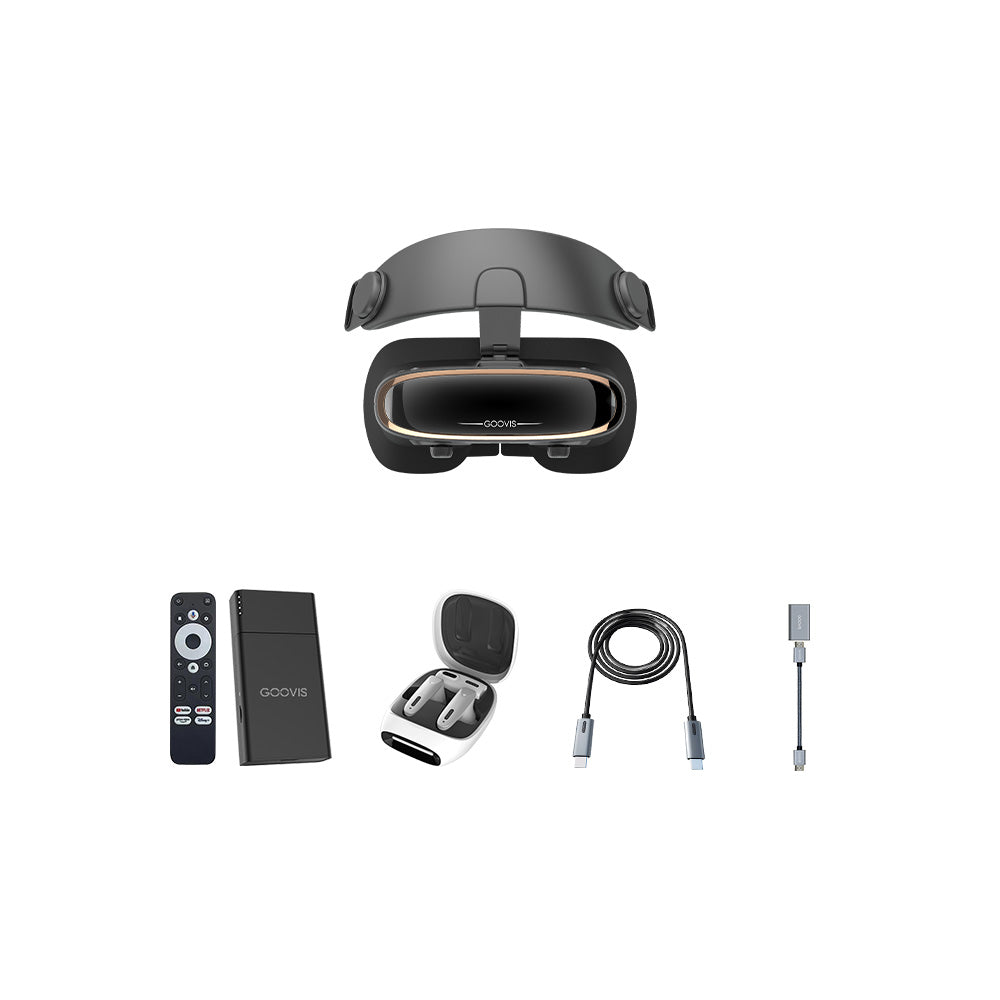
How to Stop Cybersickness with the GOOVIS G3 Max
If you are looking for how to stop cybersickness while still enjoying a massive screen experience, the solution lies in changing how the image is delivered to your eyes.
The GOOVIS G3 Max is designed to address the root causes of visual discomfort by focusing on stable, cinematic viewing rather than artificial spatial movement.
High Refresh Rate and Low Latency
The GOOVIS G3 Max utilizes a 120Hz refresh rate to ensure that every movement on the screen is fluid.
When the refresh rate is high, the brain perceives motion more naturally, which reduces the likelihood of dizziness.
Combined with an ultra-low latency of less than 0.01 milliseconds, the device eliminates the lag that often triggers motion sickness in traditional headsets.
Micro-OLED Display for Visual Stability
One of the standout features of the G3 Max is its dual 2.5K Micro-OLED displays.
These screens deliver ultra-sharp clarity with a high pixel density of 45 pixels per degree. This level of clarity is vital because it reduces the strain on the eyes.
When images are blurry or pixelated, the eyes work harder to find a point of focus, which accelerates fatigue.
The Micro-OLED technology offers a contrast ratio of over 100,000 to 1, providing deep blacks and vibrant colors that mimic the natural world more accurately than standard LCD panels.
Reduced Blue Light for Eye Comfort
Prolonged viewing can often lead to tired eyes because of high blue light emissions.
The GOOVIS G3 Max is designed with eye health in mind and has received SGS certification for low blue light levels. By filtering out harmful waves, the device allows for longer viewing sessions without the burning or dry sensation typically associated with digital screens.
Optimized FOV and Virtual Image Distance
Instead of pushing for an unnaturally wide field of view that can cause disorientation, the G3 Max uses a customized 65 degree field of view.
This creates the sensation of sitting in the best seat of a professional IMAX theater. The optics project a virtual 1000 inch screen at a distance of 20 meters. This large virtual image distance is crucial because it allows the eye muscles to remain in a relaxed state, similar to how they function when you look at a distant horizon.
Adjustable IPD and Diopter Settings
The GOOVIS G3 Max offers professional-grade optical adjustments to ensure a perfect fit for every user.
It features a diopter adjustment range from +2D to -7D, meaning that most people can use the device without wearing their prescription glasses. Additionally, the interpupillary distance can be adjusted between 58mm and 74mm.
These adjustments ensure that the lenses are perfectly aligned with your pupils, reducing the strain on the oculomotor system and providing a much more comfortable immersive experience.

Enjoy Immersion Without the Discomfort
It is clear that cybersickness is a significant hurdle for many people interested in modern display technology. However, the key to solving this issue is not found in simply limiting your time in a headset. Instead, the solution lies in choosing hardware that respects human biology.
Get a GOOVIS G3 Max today to enjoy high-quality visuals!


