


AR Glasses in 2026: Main Types, Technologies, and Future Trends
The AR glasses market in 2026 is growing quickly, but not all smart glasses are built for the same purpose. Some are designed for immersive entertainment, while others focus on lightweight daily features like notifications, voice assistants, and navigation.
As the category continues to evolve, the differences between these devices are becoming more important than ever.
The Different Types of AR Glasses Today
Today, the term “AR glasses” covers a wide range of products designed for very different experiences and usage scenarios.
Some focus on true augmented reality, where digital content is layered onto the real world through transparent lenses. Others focus more on immersive viewing, using built-in displays to create a portable large-screen experience for movies, gaming, and entertainment.
As the market continues to evolve, some products are also beginning to explore more flexible viewing approaches that balance immersion with everyday usability. These evolving product directions have gradually shaped several major categories in today’s AR glasses market.

Type 1 – Video Glasses (Birdbath Optics)
For users focused on movies, gaming, and portable entertainment, Birdbath-based video glasses remain one of the most popular categories in 2026. Most of these devices use Birdbath (BB) optics, a mature optical design widely used for personal viewing.
These devices are primarily used for:
- Watching movies and streaming content on a virtual large screen.
- Playing mobile or handheld games with a more immersive viewing experience.
- Using laptops or tablets with a portable virtual display while traveling or commuting.
Advantages of Video Glasses
- Immersion: Creates a more immersive viewing experience with a large virtual screen effect.
- Accessibility: Mature technology helps keep pricing more accessible for consumers.
- Image Quality: Typically delivers strong contrast, vivid colors, and clear visuals for movies, gaming, and entertainment.
Limitations to Consider
The main limitation of video glasses is that they are typically larger than regular eyewear because of their more complex optical structure. As a result, they may feel less comfortable during long periods of wear due to the additional pressure on the nose bridge and around the ears.
Bright environments can also affect the viewing experience, as strong ambient light may introduce reflections that reduce screen clarity.

Type 2 – Waveguide Smart Glasses
Optical waveguide glasses represent the lightweight and always-connected side of the smart glasses market in 2026. Many of these products are designed for daily wear, focusing on quick information access and AI-assisted interaction rather than immersive entertainment.
Common Use Cases
Waveguide glasses are primarily used for:
- Real-time navigation and directional prompts.
- Notifications and voice assistant interactions.
- Live translation during conversations.
- Industrial guidance and remote collaboration.
Advantages of Waveguide Glasses
- Transparency: Keeps the real world visible while adding digital information on top.
- Lightweight Design: Designed to resemble regular eyewear for more natural daily wear.
- Smart Interaction: Designed for lightweight daily interaction such as notifications, AI assistance, navigation, and real-time information access.
Current Limitations
Despite their rapid development, current waveguide glasses still face several limitations in 2026. Compared to dedicated video glasses, they usually offer a smaller viewing area and weaker display performance.
In addition, the complexity of waveguide manufacturing continues to keep pricing relatively high for many consumers.

Type 3 – Adaptive Viewing Glasses
As the AR glasses market continues to evolve, adaptive viewing glasses are designed to bridge immersive video experiences with greater environmental awareness. Unlike video glasses or smart glasses, this category focuses on providing users with more flexibility across different usage scenarios.
What Is Adaptive Viewing Design?
Adaptive viewing glasses are designed to support both immersive and open viewing experiences. Depending on the situation, users can switch between an enclosed viewing mode for stronger immersion and a more open viewing mode that allows greater awareness of the surrounding environment.
This hybrid viewing approach helps make the glasses more flexible for everyday use, especially in situations where users may not want to be completely isolated from the real world.

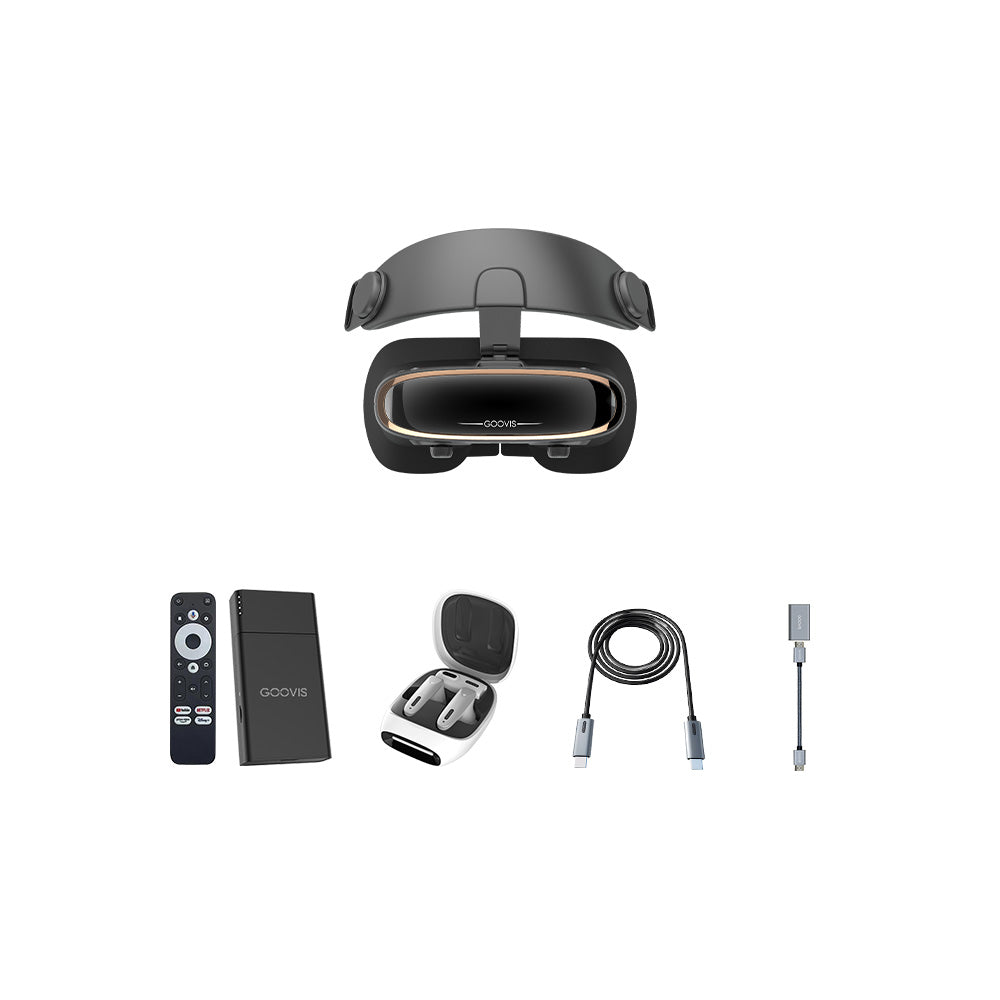
Adaptive Viewing Experience with GOOVIS G3X Series
The GOOVIS G3X series is an example of this adaptive viewing product direction. Rather than focusing on a single viewing style, the G3X series is designed to provide flexible viewing modes for different environments and entertainment scenarios.
Positioning and Vision
The G3X series is designed to deliver a high-end portable viewing experience for movies, gaming, and entertainment. Built around GOOVIS’s display-focused philosophy, it combines high-quality visuals, immersive large-screen viewing, and lightweight portability in a flexible wearable form.
At the same time, its adaptive viewing design allows users to switch between different viewing modes depending on the environment, making the device suitable for both immersive personal use and more awareness-oriented public settings.
Key Features of the G3X Series
- Dual micro-OLED displays and precision ASPH optics deliver edge-to-edge clarity with vivid colors and strong contrast.
- Large-scale virtual screen experience in a lightweight wearable design.
- Adaptive viewing modes for different environments and usage scenarios.
- Comfortable and portable for travel, gaming, and everyday entertainment.
- Plug-and-play support for smartphones, handheld consoles, laptops, and more.
Practical Use Cases for the G3X
- Private Theater: Transform everyday spaces into an immersive large-screen viewing experience.
- Portable Gaming: Connect devices like the Steam Deck, ROG Ally, or Nintendo Switch for immersive gaming anywhere.
- Mobile Productivity: Use as a portable external display for laptops, tablets, and smartphones while staying aware of your surroundings.
- Travel Viewing: Watch videos and entertainment comfortably during flights, train rides, or daily commuting.

As the AR glasses market continues to evolve, they are no longer limited to a single form factor or viewing experience. Some products prioritize lightweight daily interaction, while others focus on delivering a more immersive and visually engaging entertainment experience.
The GOOVIS G3X series is designed around this growing demand for flexibility — combining high-quality large-screen viewing with adaptive viewing modes that better fit different environments and lifestyles.


