


How to Watch 3D Movies at Home? Discover the Best Way!
3D movies captivate audiences with their stunning depth and lifelike visuals, bringing stories and characters to life like never before. With proper 3D content—such as Blu-ray 3D, SBS 3D (Side-by-Side), or TB 3D (Top-and-Bottom) movie formats—the screen can present convincing depth that makes every scene feel more dynamic and immersive.
However, watching 3D movies at home has long been difficult. While a 3D setup can be built using devices like 3D monitors, 3D TVs, or 3D projectors along with compatible 3D movie glasses, these traditional methods often involve complex settings, strict viewing angles, or hardware limitations. As a result, recreating a true cinematic 3D experience at home has felt more complicated than enjoyable.
Read this article to learn how traditional 3D movie glasses work, and discover modern solutions that make enjoying 3D films at home easier and more immersive than ever!
Traditional 3D Methods
Anaglyph (Red/Cyan) 3D Glasses
Anaglyph 3D was one of the earliest ways for viewers to experience depth at home. The red and blue color filters in the 3D movie glasses allowed each eye to receive a different image, creating a basic 3D effect.
It does not rely on specialized screens; in fact, any standard display—even printed images—can be used to view Anaglyph 3D content. Because of this flexibility, it became one of the easiest 3D formats to distribute across both videos and still images.
However, the limitations of Anaglyph 3D are significant. Color accuracy is heavily affected, and the perceived stereoscopic 3D depth often feels unstable compared with more advanced 3D formats like SBS 3D or Blu-ray 3D.
Extended viewing can cause eye strain, making Anaglyph better suited for casual, experimental experiences rather than high-quality or immersive 3D entertainment.
Polarized 3D Glasses
Polarized 3D relies on two images projected or displayed with different polarization angles. Each lens in the glasses filters the matching image for one eye, forming a sense of depth.
This method became a standard in cinemas and later entered home use through polarization-based 3D TVs and 3D monitors equipped with built-in 3D support.
Polarized 3D delivers more natural color and brightness than anaglyph systems and avoids the strong color filtering that early red/cyan 3D glasses required. However, it still depends heavily on hardware support and viewing position. To preserve the 3D depth effect, viewers must remain within a narrow viewing range — moving too far from the 3D monitor can weaken immersion instantly.
Active Shutter 3D Glasses
Active shutter 3D uses electronically driven lenses that rapidly open and close in sync with the display, sending each eye a separate image in sequence. Compared with polarized systems, it can deliver stronger depth and more detailed imagery when the playback environment is fully coordinated.
However, this method relies on shutter-compatible screens and continuous synchronization between the glasses and the display. The viewing angle also becomes more sensitive than it appears on paper—if the signal pathway is obstructed or the glasses are slightly misaligned, depth may break down or desync entirely. The active switching can also reduce brightness and introduce flicker over longer sessions, making the visual experience less stable than expected for casual home viewing.

The Problems with Traditional 3D Viewing
Traditional 3D systems made 3D viewing at home possible, but the overall experience often felt less satisfying than expected. Across different approaches, several recurring issues shaped the experience:
Visual Fatigue
Depth cues were not always stable, and flicker or mismatched focus could easily strain the eyes during longer sessions.
Sensitive Viewing Position
Maintaining the 3D effect often required staying within a narrow viewing angle; leaning back or turning sideways could weaken the depth instantly.
Brightness and Color Loss
Whether through color filtering or lens switching, the image tended to appear dimmer or less vibrant than standard viewing. Anaglyph showed this most clearly, but even improved systems were not immune.
Hardware Dependence
While anaglyph could work on any screen, polarized and active shutter systems relied on specific 3D-compatible displays and precise alignment, making home setups fragmented rather than plug-and-play.
Overall, traditional 3D movie glasses wer exciting in principle — but difficult to enjoy with comfort and consistency in everyday environments.
GOOVIS G3 Max: The Ultimate Home 3D Solution
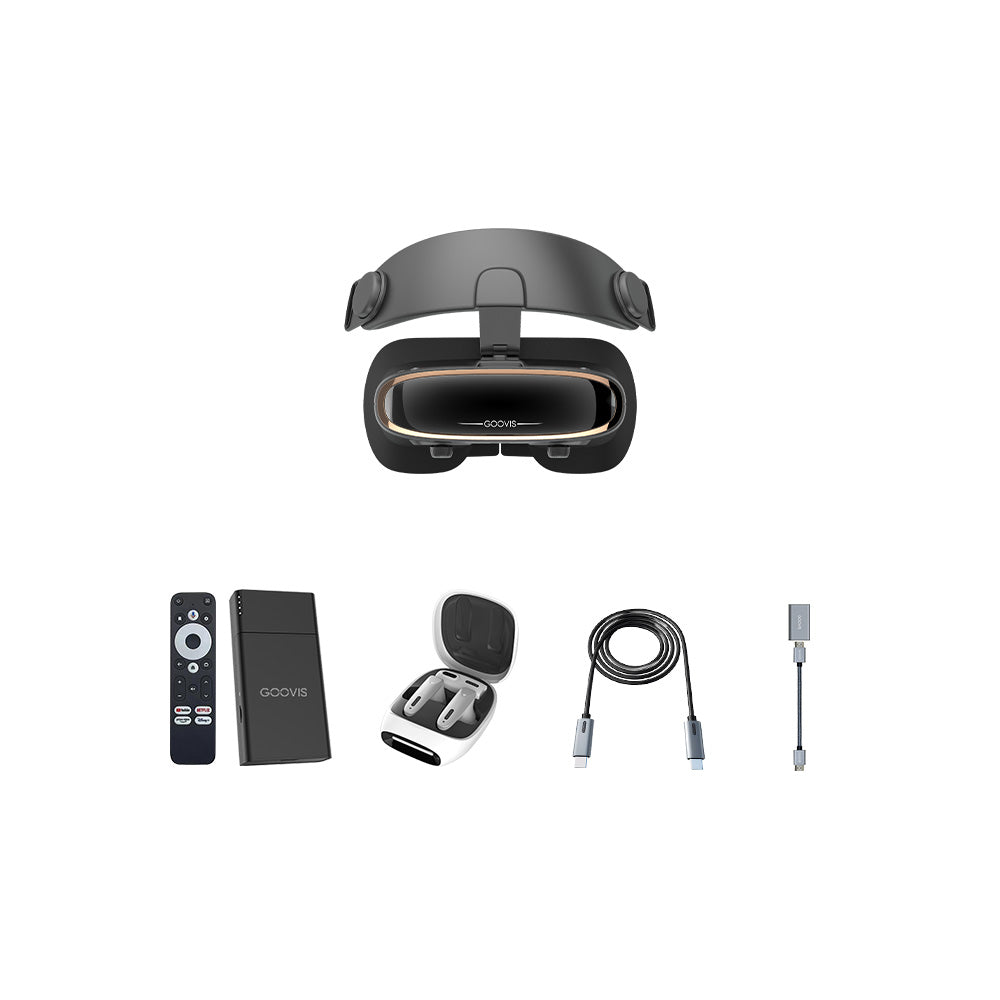
GOOVIS has developed a reputation for creating high-quality personal cinema headsets that focus on comfort, clarity, and immersive viewing. Our G3 Max continues this approach with a design that brings true 3D depth into a portable and user-friendly device.

The following features show why GOOVIS G3 Max is your ultimate home 3D solution:
Personal 3D Display
GOOVIS G3 Max delivers a true personal 3D experience through a binocular display system, where each eye receives its own dedicated image channel—rather than splitting a single screen into left and right views. This preserves full resolution and natural depth across both eyes, providing a stereoscopic image closer to professional cinema standards. The head-mounted form factor maintains optimal alignment automatically, allowing users to lie down, tilt their head, or shift posture while keeping the full 3D effect intact.
Top-Tier Image Quality
Equipped with GOOVIS's custom SLR-grade optical system and dual 1440p Micro-OLED displays, G3 Max delivers sharp, high-contrast visuals without the distortion or edge softness commonly found in conventional 3D setups. Fine textures, shadow separation, and depth cues remain clear even in darker scenes—where traditional screen-based 3D TVs and 3D monitors often flatten or lose detail.
Support for Mainstream High-Quality 3D Formats
The device works with major 3D formats including Blu-ray 3D and Side-by-Side. This compatibility makes it easy to enjoy both classic and modern 3D films at home without additional conversions.
Simple Connectivity
GOOVIS G3 Max works with a wide range of 3D-capable devices — including Blu-ray players, smartphones, PCs, media boxes, and other sources with 3D output via USB-C or HDMI. Once connected, the headset requires no screen alignment or multi-device setup, making 3D viewing straightforward and ready to enjoy with minimal preparation.
Immersive Cinematic Experience
G3 Max places the viewer in a stable, center-seat perspective—similar to the optimal position in an IMAX theater. Its enclosed viewing environment blocks distraction and preserves depth across the full image, creating a stronger sense of 3D presence than open-screen viewing. The result is a cinematic experience that feels expansive and intensely immersive, yet fully personal.
Conclusion
Traditional 3D methods made home viewing possible, yet many users experienced eye strain, reduced image quality, and complicated setups that weakened the enjoyment.
GOOVIS G3 Max presents a refreshing alternative with clear visuals, comfortable design, and simple operation that brings the excitement of 3D cinema into a personal space.
For those who want a more immersive and convenient way to watch 3D movies at home, visit our website to explore more details and options!


