


Can Nearsighted Users Enjoy Video Glasses (AR, VR, and More)?
Video glasses and immersive displays are becoming a new way to watch, play and explore, offering digital scenes that feel almost within reach.
Many potential users feel excited yet hesitant, especially if they are nearsighted and unsure whether these devices can deliver sharp and comfortable visuals.
The question is simple but important: can myopia and immersive viewing go together? You’ll find the full answer as you continue reading, along with insights that may change how you see these devices!
Visual Correction in AR and VR Devices – Solutions and Limitations
1. Wearing Prescription Glasses
In AR Glasses:
AR glasses use a glasses-like frame that sits very close to the eyes. Because of this structure, users cannot comfortably wear two pairs of glasses at the same time. Regular prescription frames simply cannot fit inside.
In VR Headsets:
Some VR headsets leave limited room inside the facial interface, allowing small-frame and low-prescription glasses to fit. However, this solution still comes with clear limitations.
Eye relief is tight, so thicker lenses are hard to accommodate and may rub against the headset’s optics. In some models, the internal space is not enough to keep the glasses in the right position, causing the frames to shift. Once this happens, the eyes no longer align correctly with the optics, which leads to softer focus or reduced clarity.
The weight and strap structure of VR headsets also press the glasses against the nose and ears, increasing pressure and discomfort during longer sessions. In addition, the heat generated inside the headset makes glasses more likely to fog up, which affects visual quality. In certain cases, the short distance between lenses may cause darkening or distortion near the edges of the view.
Overall, while some VR headsets can technically accommodate prescription glasses, the comfort, clarity, and stability over extended use are still noticeably compromised.
2. Wearing Contact Lenses
In AR Glasses:
Contact lenses work well with AR glasses because users do not need to wear an additional frame. This allows the device to sit in its proper position and helps the optics function as intended, reducing fit-related issues and keeping the view clear.
However, long sessions can still lead to dryness, especially because AR optics sit close to the eyes and require steady focus. Users with sensitive eyes may notice discomfort sooner.
In VR Headsets:
Many people prefer contact lenses for VR because they improve comfort and make the headset easier to position. The experience generally feels more natural than wearing glasses.
Even so, users who struggle with dry eyes or contact intolerance may find longer sessions challenging. Warm air inside enclosed headsets can also raise eye fatigue, making breaks even more important.
3. Built-in Diopter Adjustment
In AR Glasses:
Certain AR video glasses offer a simple near-sight adjustment, giving users a bit of flexibility when setting up the display. However, the range of AR glasses with myopia adjustment is limited (usually within about -5.0D) , and farsighted users usually receive no support.
As the myopia adjustment increases, the virtual image gradually becomes smaller, so users with higher prescriptions may naturally get a less ideal viewing experience.
In addition, most AR glasses use stepless adjustment, meaning users cannot precisely know the exact diopter they have set. This can lead to unclear visuals or eye strain if the adjustment is not accurate. Stepless adjustment is also easy to move unintentionally, causing the diopter to shift without the user noticing and affecting overall clarity.
Another detail often overlooked is that this adjustment only affects the digital layer. The real world behind the display stays exactly as it is, so users with uncorrected vision may still see the environment less clearly.
In VR Headsets:
Most popular VR headsets do not include diopter adjustment feature due to optics stucture limitation. Users usually depend on prescription glasses or dedicated lens inserts to achieve a clear view.
4. Prescription Inserts or Custom Lenses
In AR Glasses:
Prescription inserts can correct vision for AR glasses, but they also introduce new challenges. The insert adds weight to the front of the device, and AR glasses are very sensitive to any extra front load. Even a small increase can make the frame press harder on the nose and ears, which reduces overall comfort during longer sessions.
In VR Headsets:
VR users have far more options, as many third-party vendors create inserts designed for specific headsets. Once tailored to the user’s prescription, the lenses are simple to attach and remove, and they usually stay stable throughout regular use.
However, prescription inserts come with limitations that apply to both AR and VR devices. Each insert works only with one specific model, so users cannot freely move the same lenses between different headsets or glasses.
Inserts are also customized for a single person. If a device is shared among family members, the insert needs to be removed each time—or additional customized inserts must be purchased—making shared use less convenient.
Head-Mounted Displays from GOOVIS – Designed for Users with Vision Correction Needs
After exploring the challenges of vision correction in typical AR and VR devices, it is clear that not all head-mounted solutions handle nearsighted or farsighted users equally well.
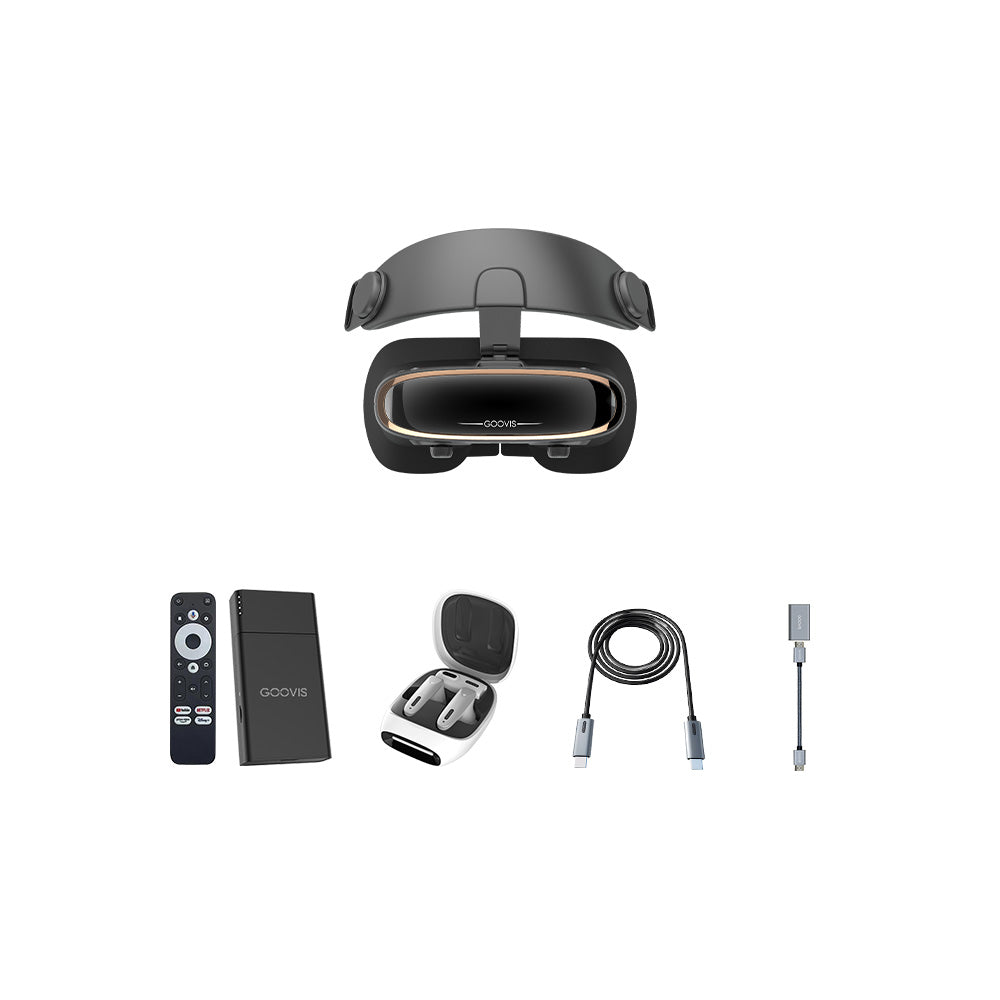
GOOVIS addresses these issues with our head-mounted displays, designed specifically to offer clear, comfortable visuals for users with different vision needs. 
GOOVIS G3 Max
The G3 Max features a patented system that allows a wide range of vision adjustment, from +2D to -7D. This system works together with digital display feedback, helping users fine-tune the focus easily.
Because the adjustment takes place directly inside the optical module—rather than relying on external lenses—the image quality remains lossless. Users with different prescriptions can all achieve the same level of clarity, sharpness, and visual comfort.
This consistent, distortion-free experience makes the G3 Max stand out from standard video glasses, ensuring that even users with strong prescriptions can enjoy clear and relaxed viewing without additional accessories.
GOOVIS Art
GOOVIS Art expands the accessibility of video glasses. Users can wear their own prescription glasses while still maintaining a clear view of the external environment.
For those who prefer not to wear glasses, the built-in diopter adjustment covers mild myopia, providing a sharp image directly through the device. This versatility accommodates different habits and preferences, making it a practical choice whether users normally rely on eyewear or not.

GOOVIS offers a superior, integrated solution for nearsighted and farsighted users who want to experience the full potential of high-quality video glasses without the hassle of inserts or discomfort from wearing frames inside a headset. Our devices prove that clarity and comfort are achievable for everyone.
Contact us today to explore the full range of GOOVIS devices and find the perfect fit for your vision needs!


