


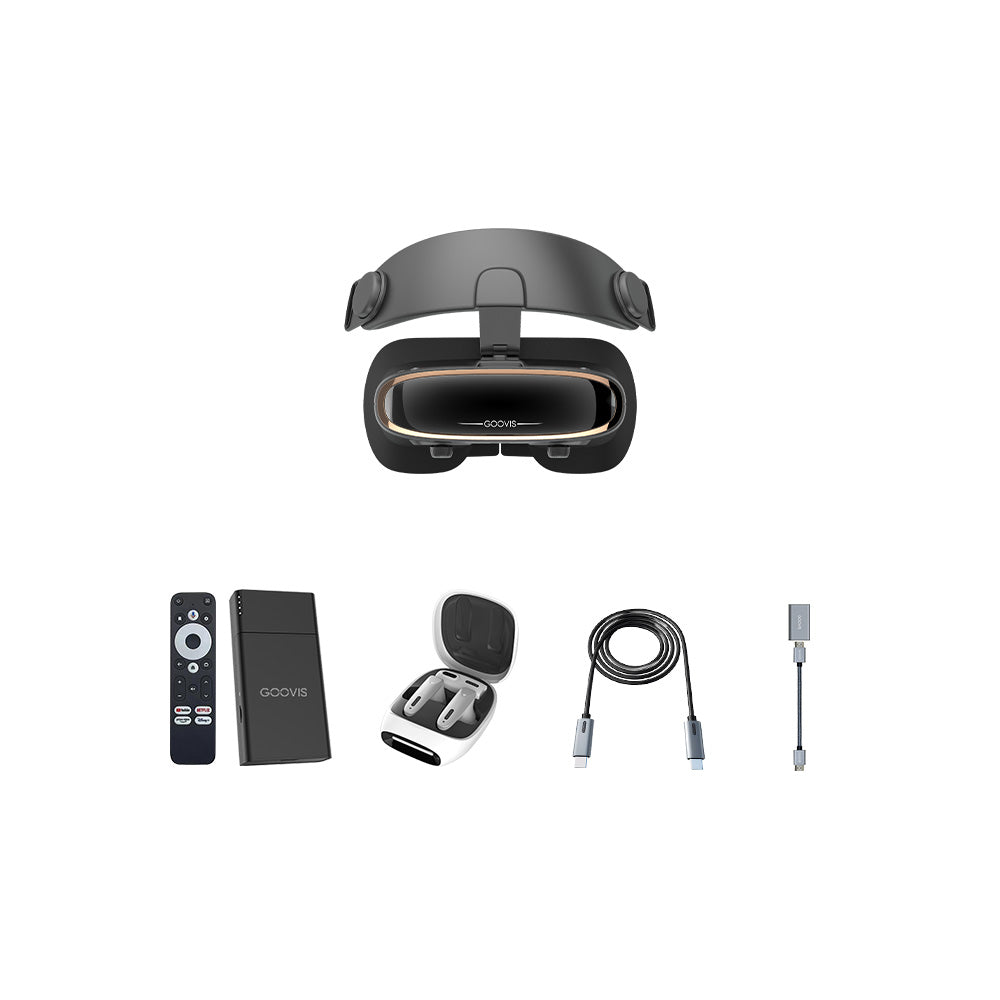

#98 How Do Virtual Reality Headsets Work?
Curiosity about the magic behind these devices is natural. A virtual reality headset functions by creating a convincing illusion of a different place. We at GOOVIS see it as a coordinated dance between several key technologies. Understanding this process shows how a VR with headset can transport your senses so effectively. The system relies on three core principles to build its immersive world.
Creating a Three-Dimensional View
The experience begins with depth perception. Your two eyes see the world from slightly different angles, and your brain merg these views into a 3D picture. A virtual reality headset mimics this by using two small screens, one for each eye. Each screen shows a nearly identical image, with a small shift in perspective. The headset's lenses then focus and reshape these images, making your brain interpret them as a single, cohesive scene with volume and space. This stereoscopic technique is the foundation of the 3D effect.
Tracking Your Head's Position
A static image would break the illusion as soon as you moved. This is where head tracking becomes essential. Inside the VR with headset, sensors like gyroscopes and accelerometers constantly measure the rotation and tilt of your head. This data is sent to the computer or smartphone powering the experience. The system instantly adjusts the images on the screens to match your new point of view. This creates a stable world that seems to remain in place as you look around, which is crucial for feeling present.
The Role of Lenses and Displays
The raw images from the screens would be unusable without a sophisticated optical system. The lenses in a VR with headset are perhaps its most critical physical component. They take the small, flat pictures from the displays and magnify them to fill your entire field of view. They also correct for any distortion, making the virtual world appear straight and natural. The quality of these lenses and the displays directly influences the sharpness, clarity, and overall comfort of the visual experience.
A virtual reality headset is, in essence, a sophisticated perceptual tool. It cleverly simulates your brain by replicating the core mechanics of human vision and spatial awareness. The seamless integration of dual displays, precise motion tracking, and custom optics creates a persuasive sense of being somewhere else. This complex coordination is what makes the simple act of putting on a headset feel like stepping into a new reality.


