


#193 Why Video Display Goggles Are Becoming the Preferred Alternative to Heavy VR Equipment
As immersive visualization technologies continue to evolve, professionals across healthcare, education, industrial inspection, and remote operations are searching for solutions that deliver high-quality visual experiences without the drawbacks often associated with traditional VR systems. While conventional VR headsets offer immersive environments, their weight, bulk, and long-term comfort limitations can create challenges in professional settings where extended use is common.
At GOOVIS, we believe that the future of professional visualization lies in lightweight, high-performance display solutions. Modern video display gogglesprovide many of the visual benefits users expect from immersive technologies while offering greater comfort, portability, and practicality. As organizations increasingly adopt vr with headset solutions for business applications, lightweight near-eye display technology is becoming an attractive alternative to heavier VR equipment.
The Problem with Traditional Heavy VR Gear
The first generation of VR devices was primarily designed for gaming and entertainment. As a result, many systems prioritized immersion over long-term wearability.
While these devices can deliver engaging experiences, professionals often encounter several challenges when using them in real-world work environments:
Excessive weight during extended sessions
Neck and facial pressure
Heat generation during prolonged operation
Visual fatigue caused by display limitations
Reduced comfort for users wearing corrective lenses
Limited practicality in mobile work scenarios
For industries such as healthcare, industrial maintenance, simulation training, and remote collaboration, comfort is not simply a convenience—it directly impacts productivity and user adoption.
Organizations investing in wearable display technology increasingly recognize that employees must be able to use these systems comfortably for extended periods without sacrificing performance.
Why Lightweight Design Matters
A key advantage of modern video display goggles is their ability to provide a large virtual viewing experience without requiring bulky hardware.
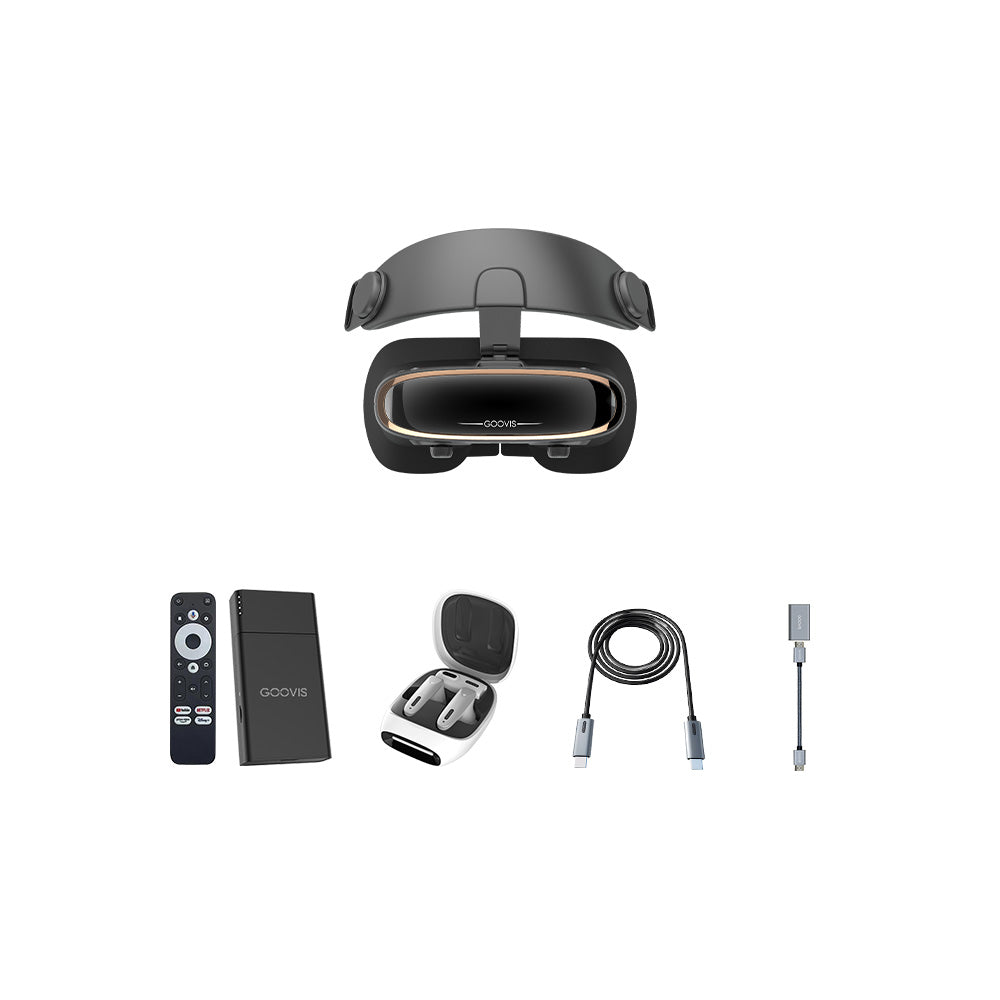
At GOOVIS, we have focused on developing near-eye display solutions that prioritize both visual quality and ergonomic comfort. For example, the GOOVIS Art weighs approximately 110 grams without the headband, significantly lighter than many traditional VR systems. This lightweight design allows users to remain comfortable during longer viewing sessions while reducing pressure on the face and neck.
For professional users, lightweight equipment can offer several benefits:
Improved long-term comfort
Reduced physical fatigue
Greater mobility
Higher user acceptance rates
More practical deployment across multiple work environments
These advantages become particularly important when visualization tools are used daily rather than occasionally.
How Video Display Goggles Deliver Professional-Grade Visual Experiences
Many organizations assume that lighter devices must compromise image quality. However, advances in near-eye display technology have changed that assumption.
GOOVIS utilizes proprietary ASPH optical technology, a glass-plastic hybrid aspherical lens system designed to achieve high optical efficiency while maintaining low distortion and excellent edge-to-edge clarity. Compared with many conventional optical architectures, this approach helps reduce image degradation and supports a more natural viewing experience.
For example, GOOVIS Art delivers approximately 55 pixels per degree (PPD), approaching the visual clarity associated with human eyesight. This level of detail is significantly higher than many traditional VR-focused devices, making it particularly suitable for professional applications that require precise visualization.
The result is a viewing experience that prioritizes image fidelity rather than simply maximizing immersion.
Advantages Over Traditional VR Systems
One of the most common complaints about conventional VR equipment is discomfort during long sessions.
GOOVIS products are designed with ergonomic principles that distribute weight efficiently while minimizing facial pressure. Unlike many heavy VR devices that can become uncomfortable after prolonged use, lightweight video display goggles support extended viewing in professional environments.
Reduced Risk of Motion Discomfort
Many VR systems rely on fully immersive virtual environments that can sometimes contribute to motion-related discomfort.
Because GOOVIS focuses on high-definition visual display rather than full-motion virtual reality experiences, users often experience a more natural viewing environment that supports longer sessions without the same level of adaptation challenges.
This makes the technology especially valuable for training, visualization, monitoring, and productivity applications.
Greater Portability
Professionals frequently need visualization tools that travel easily between locations.
Whether supporting remote medical consultations, industrial inspections, drone operations, or simulation training, lightweight vr with headset solutions offer significantly greater portability than traditional VR systems.
Users can quickly deploy the technology without requiring dedicated workstations or large equipment setups.
Applications in Healthcare and Medical Visualization
Healthcare organizations increasingly require display technologies that combine image quality with long-term usability.
At GOOVIS, our medical visualization solutions support applications such as:
Medical imaging review
Surgical observation
Remote consultation
Clinical training
Patient education
Healthcare professionals often spend extended periods analyzing visual information. Lightweight display systems help reduce physical strain while maintaining access to high-quality visuals.
Our products also support diopter adjustment and IPD adjustment ranges from 58 mm to 74 mm, enabling many users to achieve clear focus without additional corrective lenses. This flexibility is particularly valuable in shared professional environments.
Supporting Industrial and Technical Workflows
Beyond healthcare, video display goggles are increasingly used in:
Industrial Inspection
Technicians can view inspection feeds, diagnostic information, and maintenance guidance while maintaining mobility.
Remote Operations
Operators managing drones, robotics, and autonomous systems benefit from clear, private visualization in demanding environments.
Simulation and Training
Organizations can provide immersive educational experiences without requiring bulky VR infrastructure.
Mobile Workstations
Professionals can access large virtual displays while traveling or working in temporary locations.
These applications highlight the growing role of lightweight wearable displays across multiple industries.
Looking Ahead
As organizations continue to adopt wearable visualization technologies, the focus is shifting from pure immersion toward practical usability. At GOOVIS, we believe lightweight video display goggles provide an effective balance of image quality, comfort, portability, and efficiency. By combining advanced optical technology with industry-focused solutions, we help organizations leverage the advantages of vr with headset applications in healthcare, industrial operations, training, and remote collaboration.


