


#181 Why the Best 3D Headset Is Becoming Essential for Remote Education in 2026
Remote education has evolved far beyond video conferencing and digital textbooks. As educational institutions, training providers, and learners seek more immersive learning experiences, the demand for the best 3D headset solutions continues to grow worldwide. In 2026, advanced near-eye display technology is helping students interact with content in ways that traditional screens cannot achieve.
From virtual science labs to 3D engineering models and immersive language learning environments, the modern 3d vr headset is becoming an important tool for educators who want to increase engagement and improve learning outcomes.
Why Remote Education Needs More Than Traditional Screens
Although laptops and tablets remain common educational devices, they often struggle to maintain student attention during long learning sessions. Small displays, distracting environments, and limited visual immersion can reduce engagement and information retention.
Educational researchers have increasingly highlighted the importance of interactive visual learning. Subjects such as medicine, engineering, architecture, design, and technical training often require learners to understand spatial relationships and complex structures. Viewing these materials on a flat display may not provide the depth needed for effective understanding.
This challenge has encouraged schools, universities, and professional training organizations to explore immersive display technologies. As a result, the global market for the best 3d headset solutions is expected to expand significantly throughout 2026.
The Growing Role of the 3D VR Headset in Education
A modern 3d vr headset can create a personal learning environment that minimizes distractions while delivering highly detailed visual content.
Students can:
Explore virtual laboratories.
View anatomical structures in three dimensions.
Participate in simulated technical training.
Study architectural models at full scale.
Experience virtual field trips from anywhere.
Unlike conventional displays, near-eye display technology creates the perception of a much larger screen without requiring dedicated classroom infrastructure. This flexibility is particularly valuable for remote learners and hybrid education programs.
As educational institutions continue adopting digital transformation strategies, immersive head-mounted displays are becoming practical tools rather than experimental technologies.
In addition, immersive display technologies can support collaborative learning by allowing students to interact with the same visual content remotely. This capability is particularly valuable for engineering projects, medical training sessions, and other educational activities that require detailed visual communication and teamwork.
What Defines the Best 3D Headset for Remote Learning?
Not every headset is suitable for education. Many virtual reality devices are optimized primarily for gaming and may prioritize wide field of view over image clarity.
For learning applications, several factors are particularly important:
Image Clarity and Pixel Density
Educational content often contains text, diagrams, formulas, and technical illustrations. High image sharpness is essential for reading and understanding detailed information.
A key measurement is Pixels Per Degree (PPD), which evaluates perceived visual clarity. Higher PPD values generally provide sharper images and reduce visual strain during long study sessions.
Eye Comfort During Extended Use
Students may spend several hours attending lectures, reviewing materials, or participating in virtual training sessions. Comfortable viewing is therefore critical.
Features such as adjustable interpupillary distance (IPD), diopter adjustment, and low blue light technology help reduce eye fatigue and support longer learning sessions.
3D Content Compatibility
The best 3d headset should support modern 3D educational content formats, allowing students to fully experience interactive simulations and visual learning resources.
Device Compatibility
Educational users need flexibility. A headset should work with laptops, tablets, smartphones, and other learning devices without requiring complicated setup procedures.
How GOOVIS Supports the Future of Remote Education
As a specialist in near-eye display technology, GOOVIS has developed solutions that prioritize image quality, viewing comfort, and immersive visual experiences.
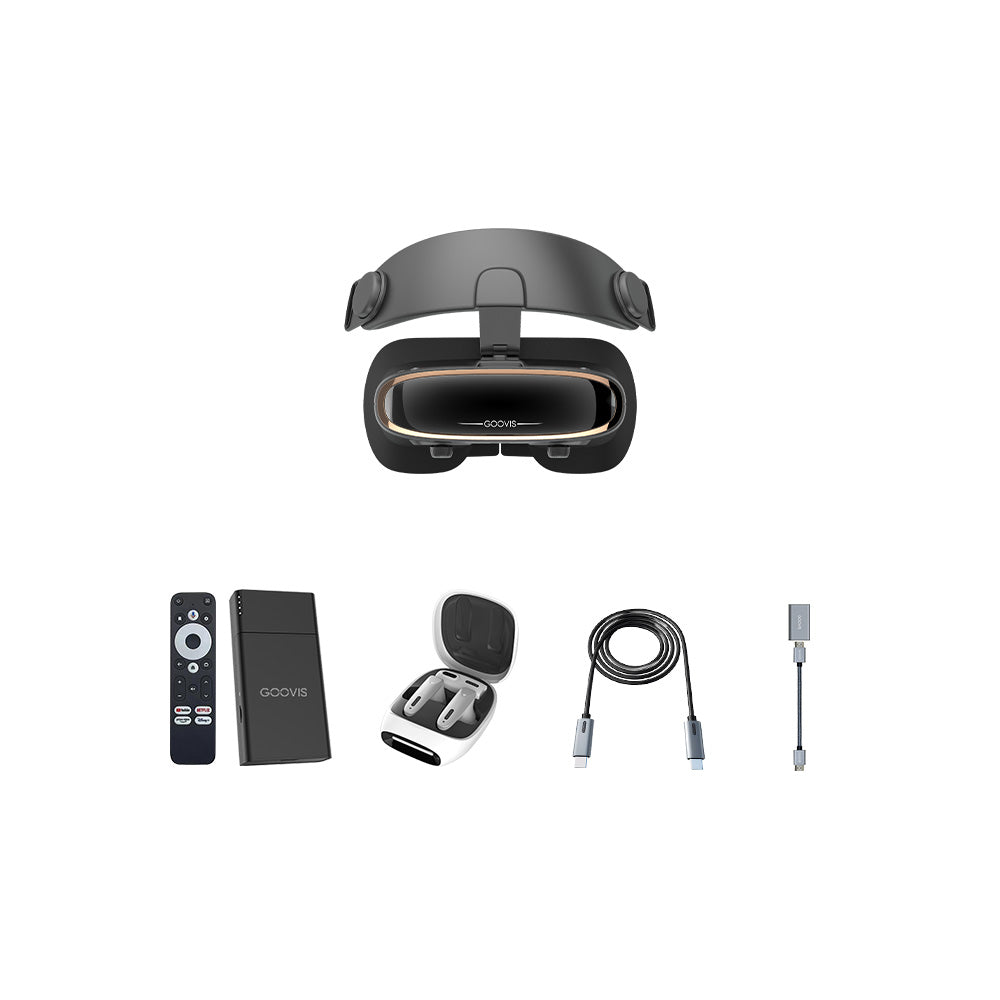
One example is the NEDOM 1, which reflects the company's focus on delivering high-quality personal display experiences. Combined with GOOVIS's expertise in optical engineering, the device is designed to provide a large virtual screen experience in a compact and portable form.
GOOVIS has built its reputation around advanced optical technologies, including proprietary ASPH optical systems and high-definition near-eye displays. The company has accumulated more than 150 global patents and serves users in over 60 countries, demonstrating significant expertise in immersive display development.
The company's approach emphasizes image clarity, visual comfort, and long-term usability—qualities that align closely with the needs of modern remote education.
Future Trends Driving Demand in 2026
Several global trends are accelerating adoption of immersive educational technologies:
Hybrid Learning Models
Many universities and organizations now combine in-person and online instruction. Immersive displays help create more engaging remote learning experiences.
Skills-Based Training
Industries such as healthcare, aviation, engineering, and manufacturing increasingly rely on visual simulation for workforce development.
Personalized Learning Environments
Students want flexible study solutions that can be used at home, while traveling, or in shared living spaces.
Global Access to Education
Immersive technologies enable institutions to deliver high-quality educational experiences to learners regardless of location.
As these trends continue, the role of the 3d vr headset in education will become increasingly important.
Conclusion
The future of remote education is becoming more immersive, interactive, and visually engaging. While traditional screens will remain important, they are no longer the only option for delivering high-quality learning experiences.
For educators and learners seeking deeper engagement, better visualization, and greater flexibility, investing in the best 3d headset technology can provide significant advantages. Devices powered by advanced near-eye display systems, such as those developed by GOOVIS, are helping shape a new generation of digital learning experiences.
As global demand for immersive education solutions grows throughout 2026, high-performance3d vr headset technology is poised to become an essential part of modern learning environments.


