


#170 Seeing Beyond Entertainment: How GOOVIS Precision Optics Elevate Professional Workflows
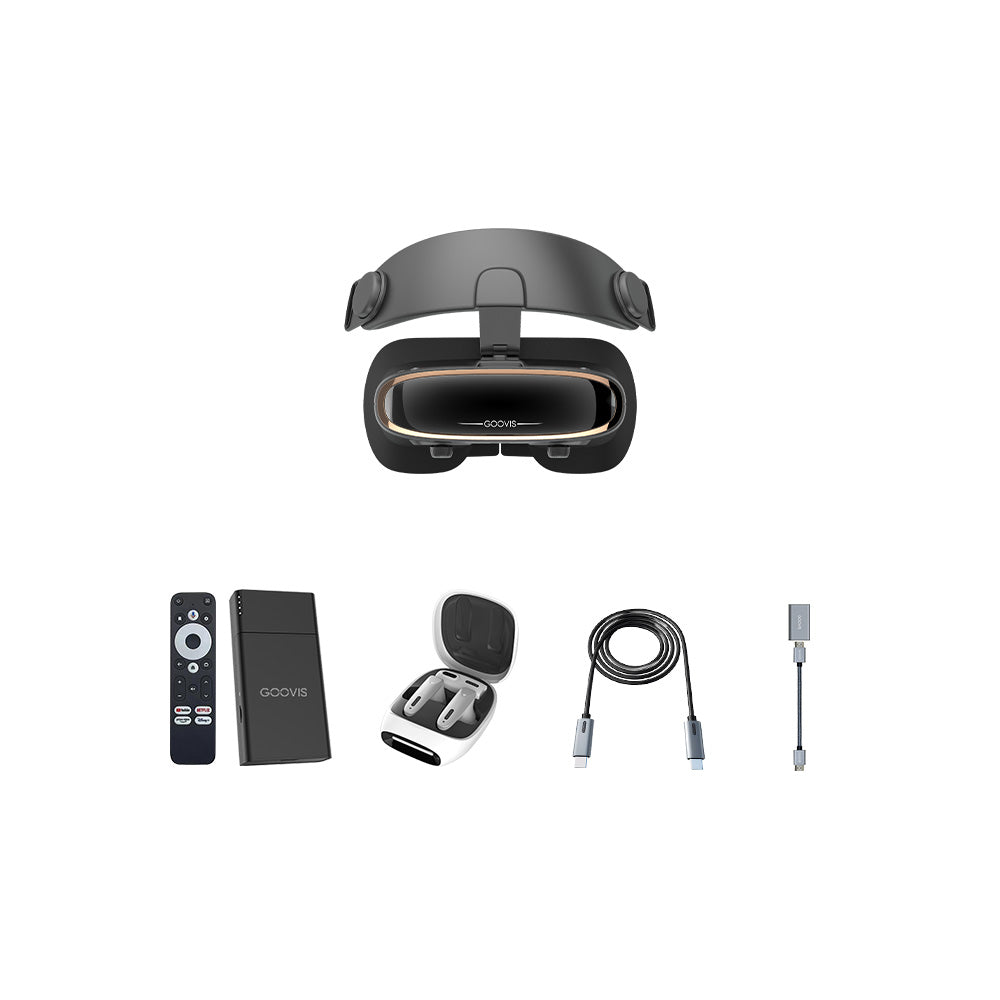
From drone operation to surgical training, the conversation around virtual reality goggles often drifts toward gaming. However, when we talk about GOOVIS, we shift the focus to a different kind of visual utility. Many ask, "What do virtual reality goggles do in a serious, professional environment?" The answer lies not in cartoon avatars or virtual worlds, but in pixel-perfect precision and ergonomic endurance. At GOOVIS, we engineer head-mounted displays that function less like a toy and more like a portable, high-fidelity reference monitor. Our focus on VR with headset technology for B2B applications means solving real problems: eye strain from small screens, lack of privacy in open offices, and the need for mobility without sacrificing visual data integrity. While the term "virtual reality goggles" conjures images of full immersion, our devices operate on a principle of augmented clarity, bridging the gap between digital data and the physical workspace.
The Critical Role of PPD in Professional Visual Acuity
In B2B scenarios, "good enough" resolution is a liability. When a technician is inspecting a micro-solder joint or a cinematographer is pulling focus on a drone shot, the question "What do virtual reality goggles do for my accuracy?" is paramount. The answer is measured in Pixels Per Degree (PPD). Unlike consumer VR with headset systems that hover around 20 PPD, resulting in a noticeable screen-door effect, our GOOVIS G3 Max delivers 45 PPD, and the Art model achieves 55 PPD. This is near the human eye's practical discernment limit of 60 PPD. For professional users of virtual reality goggles, this metric means the difference between guessing at a wire connection diagram and clearly reading the pin labels. It transforms the headset from a source of visual fatigue into a tool for precision. In fields like telemedicine or industrial design review, this high PPD ensures that what you see is an exact, undistorted replica of the source material, preserving the integrity of the visual data without the edge blur common in other optical solutions.
Ergonomic Transparency: The Open-Design Advantage for Multitasking
A significant limitation of standard VR with headset equipment in the workplace is the sensory deprivation it creates. For many professional users, the answer to "what do virtual reality goggles do" includes an unwanted side effect: they disconnect you from your immediate tools. Our GOOVIS Art model addresses this directly with an open, suspended design. Unlike sealed virtual reality goggles, the Art allows for an unobstructed downward and peripheral view of the real environment. This is critical in B2B scenarios such as live event production or equipment maintenance, where an operator must simultaneously monitor a private data stream and the physical console buttons or cables around them. We have found that professionals need to glance at a keyboard or a flight controller without removing the headset. By utilizing our high-efficiency ASPH optics encased in a black lens barrel, we block ambient light interference to the display while keeping the user's external vision clear. This reduces the cognitive load of switching between virtual displays and physical tasks, enhancing safety and efficiency in dynamic work environments.
Optical Fidelity Versus Immersive Width in Industrial Application
When evaluating virtual reality goggles for B2B use, there is often a misconception that a wider Field of View (FOV) equates to better performance. In the "Impossible Trinity" of HMD design, we at GOOVIS prioritize clarity and low distortion over sheer FOV width. While a 90° FOV VR with headset might be suitable for gaming, it often introduces motion sickness and edge warping during long-term use. For professional work—whether it's a pilot viewing a UAV feed or a photographer using the headset as an electronic viewfinder—a stable, flat image is non-negotiable. Our ASPH optical solution ensures distortion stays below 2% (G3 Max) and even under 1% (Art). Furthermore, the question "what do virtual reality goggles do for my eyes over an 8-hour shift?" is addressed by our 20-meter virtual focal distance. Instead of forcing the ciliary muscles to focus on a screen millimeters away, our optics project the image to a relaxed focal point. This reduces accommodative stress, a key factor validated by our SGS Low Visual Fatigue certification.
The utility of head-mounted technology in the B2B sector extends far beyond the novelty of virtual reality goggles. It is about delivering a reliable, portable, and visually uncompromising interface. Whether it is the high-density 45 PPD clarity of the G3 Max for reviewing complex schematics or the situational awareness afforded by the Art's open design, GOOVIS addresses the functional gaps left by traditional monitors and broad-brush VR with headset entertainment devices. By redefining what virtual reality goggles do in professional hands, we provide a solution that supports precision workflows, protects visual health, and integrates seamlessly into the user's existing physical space. We believe that true professional advancement comes not from virtual escapism, but from enhancing the clarity and comfort of the work that matters.


