


#162 Optical Efficiency and Ocular Health: Identifying Which Virtual Reality Headset is Best for Your Eyes
Evaluating which virtual reality headset is best requires a deep dive into the physics of near-eye display systems and their biological impact. At GOOVIS, we prioritize the "Impossibility Trinity" of head-mounted displays—balancing field of view, clarity, and weight. Many consumer units struggle with light efficiency, often hovering between 10% and 12.5%, but our specialized ASPH (glass-plastic hybrid aspheric) optical solution achieves a remarkable 70% to 85%. By simulating a 110-inch screen at a 4-meter distance, we provide a "far-field" viewing experience that relaxes the ciliary muscles of the eye. This scientific approach directly addresses digital eye strain, ensuring that when we use a virtual reality headset, the experience is as healthy as it is visually stunning.
High-Density Optics for Professional Visual Integrity
Precision in industries like drone piloting or medical imaging depends on the clarity provided by the VR with headset configuration. We have engineered the GOOVIS Art to deliver 55 PPD (Pixels Per Degree), which sits near the human eye's theoretical recognition limit of 60 PPD. This ensures that a virtual reality headset remains free from the distracting "screen door effect" common in lower-density displays. With 1080p Micro-OLED panels and a 110% sRGB color gamut, our system ensures that every frame is rendered with scientific accuracy. The high contrast ratio of 100,000:1 allows for perfect detail in shadows and highlights, making this VR with headset an essential tool for professionals who cannot afford to miss a single detail in high-stakes environments.
Ergonomic Engineering for Workplace Multitasking
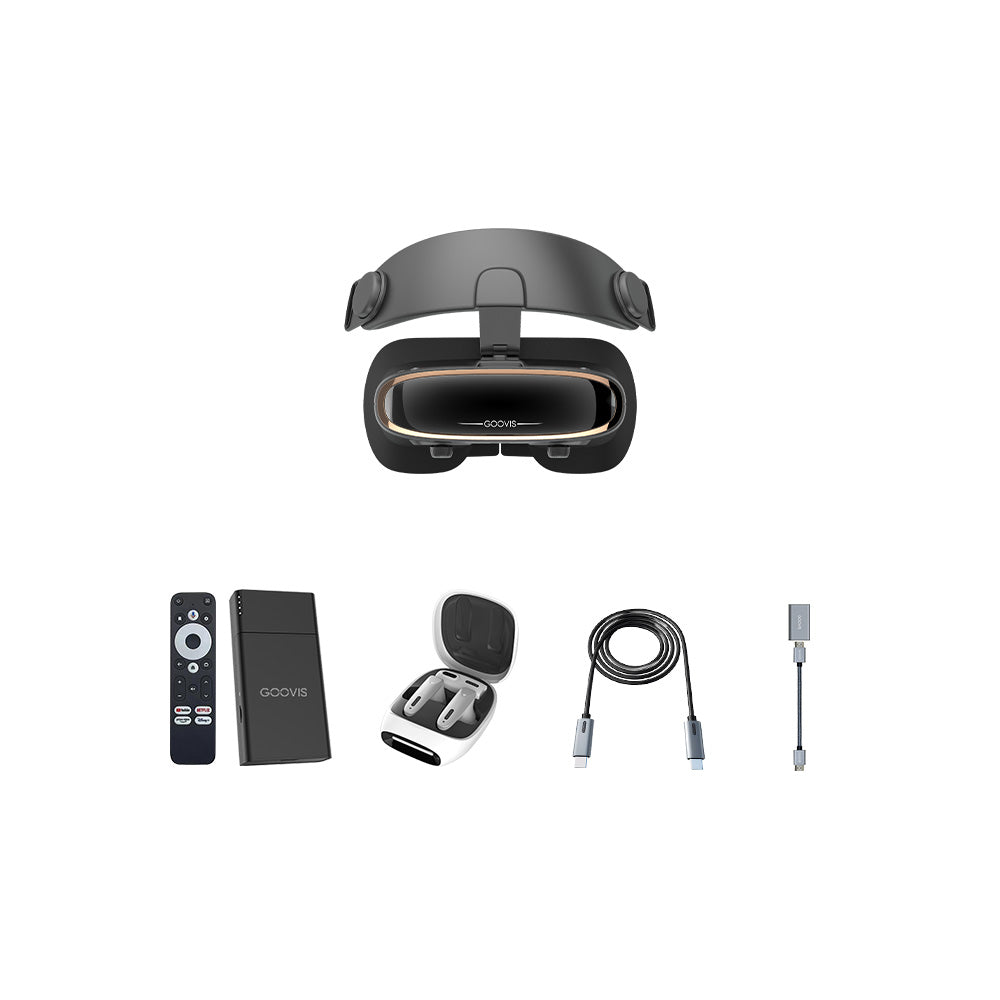
Determining which virtual reality headset is best also involves analyzing the physical stress placed on the user. We designed the Art with an open-hanging structure that supports the device via the forehead, which is scientifically more effective at preventing pressure on the nose and ears than traditional straps. This structure allows us to maintain a weight of only 110 grams, ensuring that the virtual reality headset can be worn for several hours without neck fatigue. Furthermore, because this VR with headset does not obstruct peripheral vision, it allows for safe multitasking in a private office setting. We can monitor our digital workspace while remaining aware of our physical surroundings, proving that a virtual reality headset can integrate seamlessly into a professional work routine without causing environmental isolation.
Biological Protection and Consistency in Mobile Trave
Mobile environments present specific challenges for visual consistency, making the portability of a VR with headset a significant health factor. To protect the retina, our Micro-OLED screens are certified for low blue light emissions, which is critical for maintaining natural sleep cycles during long-distance travel. We also include a built-in diopter adjustment ranging from 0 to -3.50D and a wide interpupillary distance (IPD) adjustment from 58mm to 74mm. This scientific precision ensures that when we use a virtual reality headset, the image is perfectly aligned with our unique physiological traits, preventing the headaches often caused by misaligned lenses. Whether we are in a cramped airplane seat or a moving vehicle, the VR with headset provides a stable, high-definition cinema experience that respects our biological need for visual comfort and safety.
We are committed to the philosophy that high-end digital displays must respect the natural limitations of human sight. The question of which virtual reality headset is best is ultimately answered by the quality of the lenses and the ergonomics of the design. By utilizing high-efficiency ASPH optics and 1080p Micro-OLED technology, we provide a virtual reality headset that delivers 55 PPD clarity without the bulk of traditional units. Our focus on far-field imaging and low blue light certification ensures that every VR with headset we produce serves as a tool for both productivity and ocular protection. At GOOVIS, we continue to bridge the gap between advanced visual science and the everyday needs of professionals and enthusiasts, ensuring that a virtual reality headset remains a safe and effective extension of human vision.


