


#146 Why Today’s Best AR Glasses Prioritize Comfort and User-Centric Form Factors
Across the professional landscape, we have watched augmented reality evolve from bulky, attention-grabbing prototypes into sophisticated tools for industry. Yet for years, adoption stalled—not because the technology lacked power, but because the hardware lacked comfort. Today, we see a clear industry-wide pivot: the best AR glasses are no longer judged solely by resolution or field of view. Instead, lightweight ergonomics have become the defining benchmark. In this article, we explore why this shift matters for business users, from field engineers to medical professionals.
Reducing Fatigue for All-Day Professional Use
When we consider real-world deployment, prolonged wearability is non-negotiable. Legacy AR devices, often exceeding 300 grams, cause neck strain, temple pressure, and user fatigue within hours. The new generation of best AR glasses achieves sub-100-gram designs without compromising optical performance. Similarly, premium virtual video glasses now distribute weight evenly across the nasal bridge and temples, allowing surgeons, trainers, and remote support staff to maintain focus for full shifts. We have learned that a lighter frame directly improves task accuracy and reduces error rates—especially in high-stakes environments like operating rooms or assembly lines.
Accommodating Diverse Users Without Compromise
A second driver toward ergonomic design is the need for universal fit. Traditional headsets often alienate users who wear prescription eyewear or have non-standard interpupillary distances. Leading best AR glasses now incorporate hardware-level diopter adjustment, a feature we at GOOVIS have championed. This eliminates the need for corrective lenses underneath the device, preserving both comfort and hygiene. Furthermore, wide-range IPD support ensures that each user sees a single, sharp image without eye strain. When video glasses offer this level of personalization, training sessions become more inclusive, and adoption rates across diverse teams rise significantly.
Enabling Seamless Integration with Existing Workflows
Third, lightweight ergonomics enable mobility. Bulky headsets tether users to desks or require frequent readjustment, breaking workflow continuity. Modern best AR glasses are designed for quick donning and doffing, allowing professionals to transition between digital overlays and physical tasks fluidly. For instance, maintenance technicians inspecting machinery can look up from video glasses to consult paper manuals or speak with colleagues—all without removing the device. This seamless integration, powered by ergonomic frames and unobstructed peripheral vision, transforms AR from a novelty into a daily productivity tool.
Our Commitment at GOOVIS
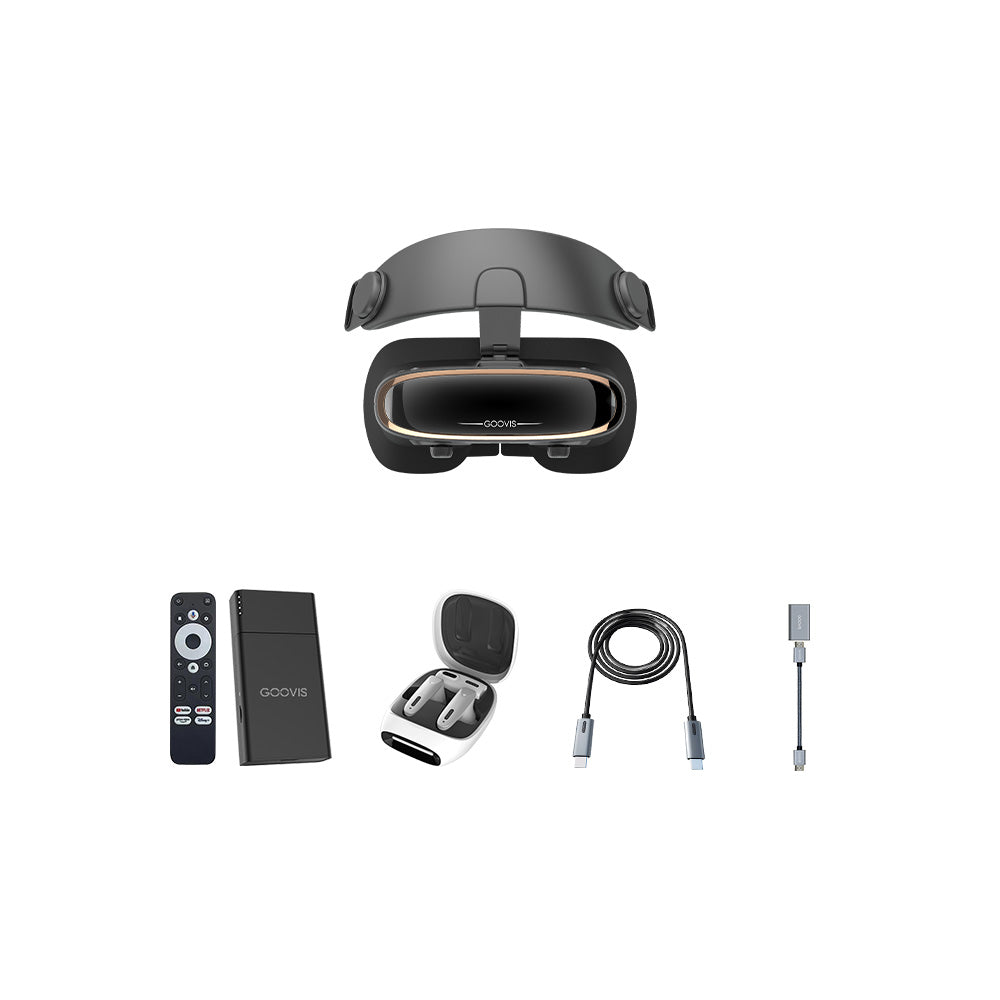
As we reflect on these industry trends, we at GOOVIS remain focused on visual excellence without sacrificing comfort. Our proprietary ASPH optical system, inspired by SLR camera lenses, delivers distortion below two percent, minimal chromatic aberration, and uniform sharpness across the entire display—ensuring that our video glasses and best AR glasses achieve industry-leading clarity down to the finest detail. Combined with hardware-level diopter adjustment for a wide range of prescriptions, we have engineered headsets that professionals can wear all day, every day. The future of AR is not just smarter—it is lighter, more comfortable, and built for real human use. We invite you to experience the difference.


