


#141 Top 5 Ways Video Headsets Are Transforming Medical Surgery Training
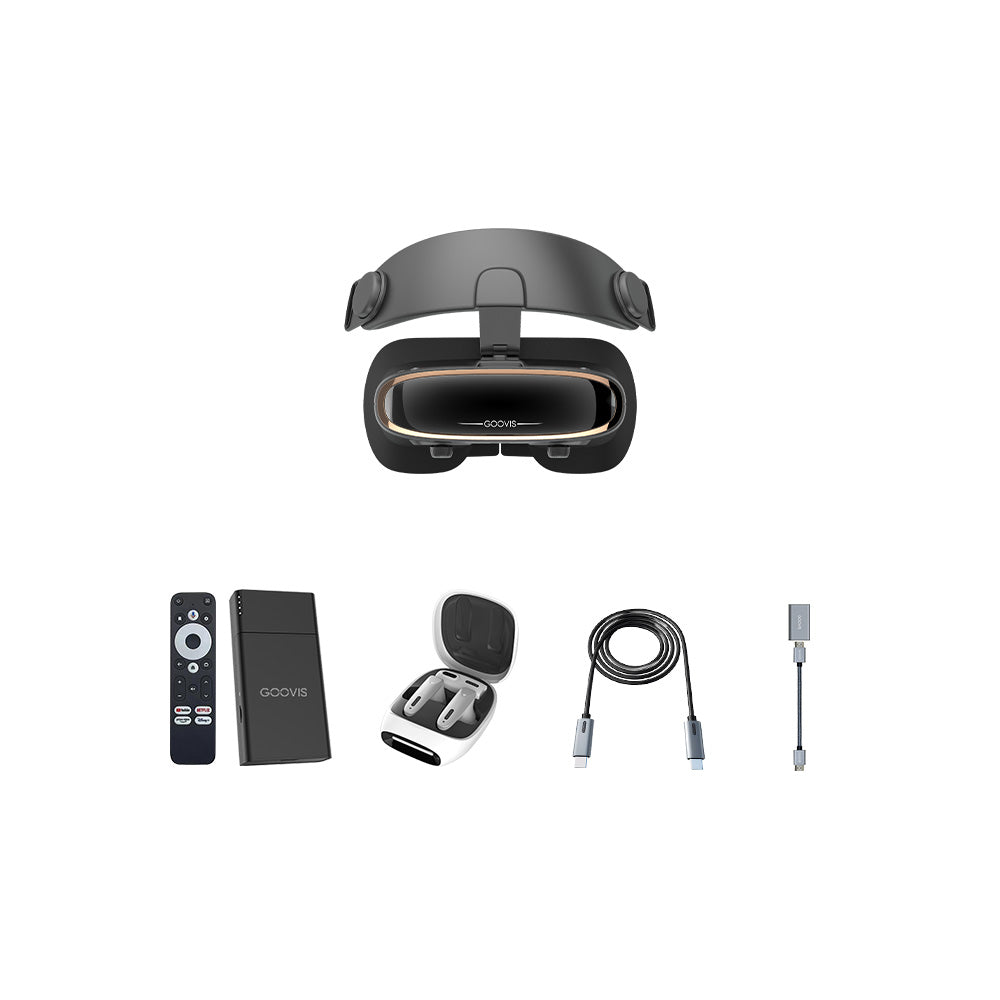
When we examine the evolution of medical surgery training, one truth becomes undeniable: traditional observation methods—crowded operating rooms, fixed monitor placements, and limited viewing angles—have long hindered the learning experience. Today, we see a paradigm shift driven by advanced wearable visualization. Among the most promising tools are the OLED VR headset and the video headset, technologies that free surgical trainees from static displays and unlock unprecedented clarity. Below, we explore five transformative applications now reshaping how future surgeons learn.
Enhancing First-Person Perspective Training
The first major application places trainees directly into the surgeon’s visual field. Using a high-fidelity video headset, trainees see exactly what the operating surgeon sees—every incision, suture, and tissue manipulation—without physical crowding. This first-person perspective dramatically accelerates skill acquisition. Unlike conventional monitor-based observation, where angle and distance distort spatial judgment, an OLED VR headset delivers true-to-life contrast and deep blacks, making anatomical boundaries unmistakable. Consequently, trainees develop better hand-eye coordination before ever holding a scalpel.
Enabling Remote Proctoring and Mentorship
Second, video headsets bridge geographical gaps in surgical education. With a low-latency video headset, an expert proctor can guide a trainee from another city or country, overlaying annotations and verbal cues in real time. The OLED VR headset excels here because its per-pixel luminance and high resolution preserve subtle tissue textures even over compressed video streams. This application expands training access to rural hospitals and under-resourced programs, democratizing top-tier surgical mentorship without requiring expensive travel or infrastructure.
Supporting Microsurgical and Laparoscopic Skill Building
Third, for delicate procedures like microsurgery or laparoscopy, the OLED VR headset offers a distinct advantage: magnification without optical distortion. Trainees wearing a video headset can zoom into simulated or recorded surgical fields, observing vessel anastomoses or nerve repairs in pixel-perfect detail. Repeated exposure to such high-definition footage shortens the learning curve for fine motor tasks, reducing errors when trainees transition to live patients.
Recording and Debriefing with Visual Precision
Fourth, video headsets enable structured debriefing. Surgical sessions recorded through a video headset become searchable training libraries. Trainees review their own performance side-by-side with expert demonstrations, identifying subtle deviations in instrument handling. An OLED VR headset ensures that dark cavities and reflective tissue surfaces remain visible during replay—a critical feature that standard monitors often fail to capture.
Reducing Physical Strain During Long Training Sessions
Fifth, and often overlooked, is ergonomics. Prolonged observation of fixed monitors causes neck and eye fatigue. A lightweight video headset allows trainees to maintain neutral postures while viewing surgical fields. This unconstrained viewing experience, which we at GOOVIS have refined through nearly a decade of Near-Eye Display research, sustains focus and enhances hand-eye coordination across multi-hour training blocks.
Bringing It All Together with GOOVIS
Across these five applications, the common denominator is visual fidelity and freedom from fixed displays. As we reflect on our journey at GOOVIS, we have spent nearly a decade redefining immersive visual experiences through Near-Eye Display technology. Our head-mounted displays deliver lightweight portability, cinematic brilliance, and unparalleled clarity—ensuring that every surgeon and trainee enjoys the highest level of visual fidelity, wherever they learn or operate. From unconstrained viewing angles to seamless hand-eye coordination, GOOVIS solutions are purpose-built for the demanding reality of medical surgery training. We invite training programs to experience the difference that precision optics and OLED innovation can make.


