
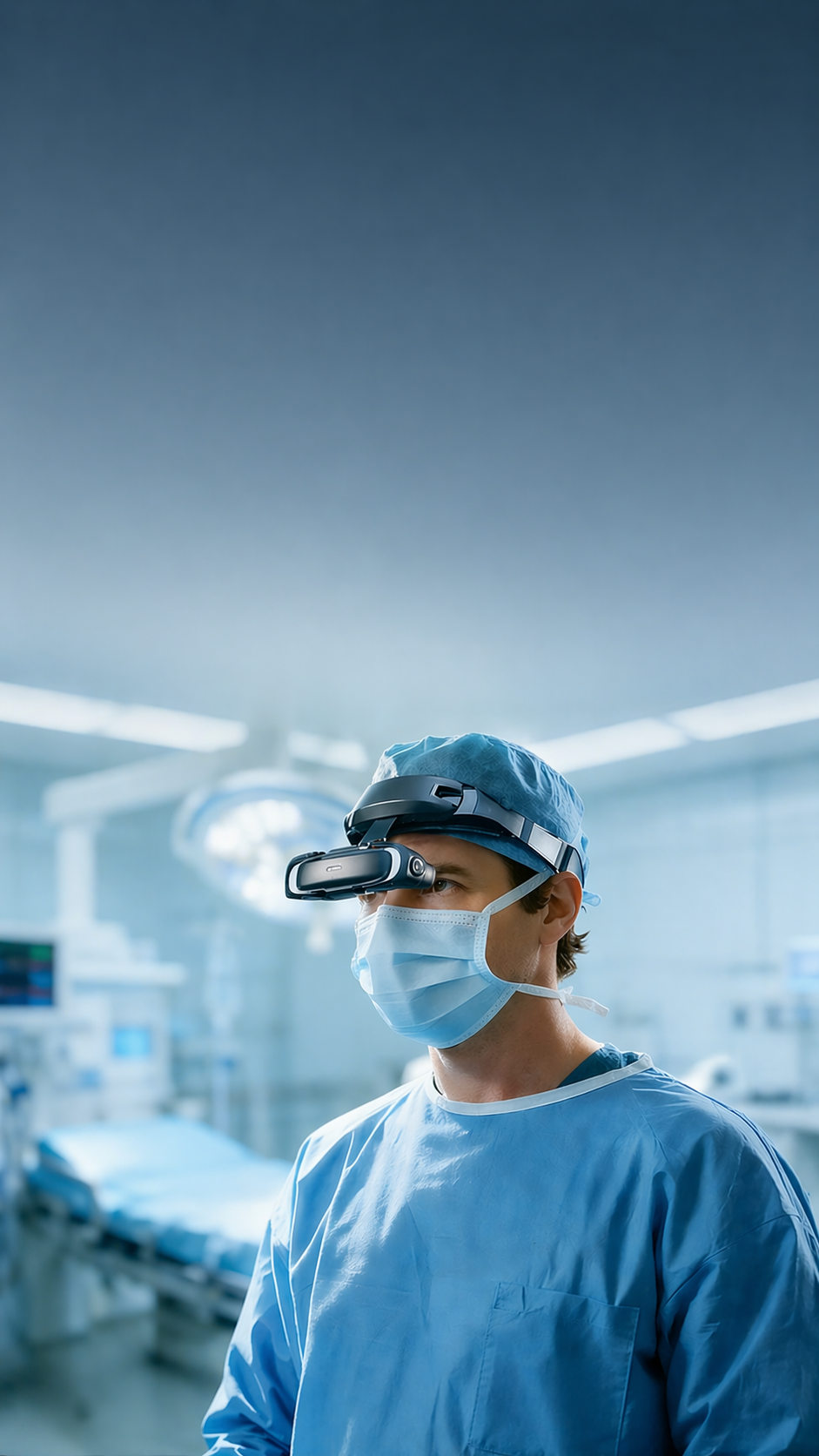

Clinical Visualization Should Adapt to the Procedure — Not the Other Way Around
In current clinical practice, visualization is still largely built around conventional viewing setups—where imaging is presented through externally positioned displays or fixed optical paths. This way of viewing introduces a range of practical limitations in how visual information is accessed, experienced, and integrated into clinical workflows.

Constrained Viewing Postures
With traditional medical displays fixed in position, surgeons are required to align their posture with the screen throughout procedures. Over time, this results in increased cervical, shoulder, and back strain, contributing to physical fatigue and reduced procedural stability.

Misaligned Line of Sight
Traditional medical monitors are fixed in place, forcing surgeons to constantly switch their gaze between the surgical site and the screen. This repetitive movement disrupts surgical concentration and impairs hand-eye coordination.

Compromised 3D Viewing Experience
Most 3D medical monitors rely on polarized 3D glasses to deliver stereoscopic imaging. This often results in reduced brightness and image clarity, while limiting the accuracy of depth perception—making it harder to interpret spatial relationships during procedures.
NEDO Medical Visualization Solutions
Breaking the limits of conventional medical displays—bringing a new era of clinical visualization.
Traditional Displays

NEDO Solutions


Unconstrained Viewing Experience
Frees visualization from fixed displays, allowing surgeons to maintain clear and stable viewing from any angle or posture, which reduces physical strain, sustains focus throughout procedures, and enhances hand–eye coordination to support greater precision, safety, and procedural efficiency.

Seamless Hand–Eye Coordination
Presents surgical imagery continuously within the line of sight, allowing perception to become more direct and intuitive, with reduced visual fragmentation and stronger hand–eye coordination for more precise, controlled, and consistent operation.

High-Fidelity Visual Clarity
Powered by proprietary optical architecture, delivering 4K-level imaging that preserves critical visual detail with consistent clarity across the entire image—ensuring stable, high-confidence visualization throughout procedures and enabling precise execution with a more controlled, efficient surgical workflow.

Advanced 3D Visualization
Delivers stable 3D visualization without the brightness or color compromise typically associated with conventional 3D displays, ensuring accurate, high-confidence depth perception throughout procedures and supporting clear spatial judgment.

Enhanced Team Collabration
Supports real-time image sharing across multiple head-mounted displays and 180° image rotation, ensuring a unified viewing perspective across different surgical positions and enabling seamless team coordination, precise workflow alignment, and highly efficient collaborative procedures.

Adaptive Visual Fit
Accommodates prescription glasses while supporting diopter adjustment from 0 to -3.5D per eye and an interpupillary distance range of 58–74 mm, enabling precise visual alignment for individual clinicians and ensuring clear, comfortable viewing without altering natural viewing habits.
Unconstrained Viewing Experience
Frees visualization from fixed displays, allowing surgeons to maintain clear and stable viewing from any angle or posture, which reduces physical strain, sustains focus throughout procedures, and enhances hand–eye coordination to support greater precision, safety, and procedural efficiency.
High-Fidelity Visual Clarity
Powered by proprietary optical architecture, delivering 4K-level imaging that preserves critical visual detail with consistent clarity across the entire image—ensuring stable, high-confidence visualization throughout procedures and enabling precise execution with a more controlled, efficient surgical workflow.
Advanced 3D Visualization
Delivers stable 3D visualization without the brightness or color compromise typically associated with conventional 3D displays, ensuring accurate, high-confidence depth perception throughout procedures and supporting clear spatial judgment.
Open-View Awareness
Features an innovative open-view design, enabling surgeons to clearly view procedural imagery while maintaining awareness of the surrounding environment, ensuring continuous situational awareness throughout procedures and supporting more intuitive operation.
Enhancing Team Collabration
Supports real-time image sharing across multiple head-mounted displays and 180° image rotation, ensuring a unified viewing perspective across different surgical positions and enabling seamless team coordination, precise workflow alignment, and highly efficient collaborative procedures.
Adaptive Visual Fit
Accommodates prescription glasses while supporting diopter adjustment from 0 to -3.5D per eye and an interpupillary distance range of 58–74 mm, enabling precise visual alignment for individual clinicians and ensuring clear, comfortable viewing without altering natural viewing habits.
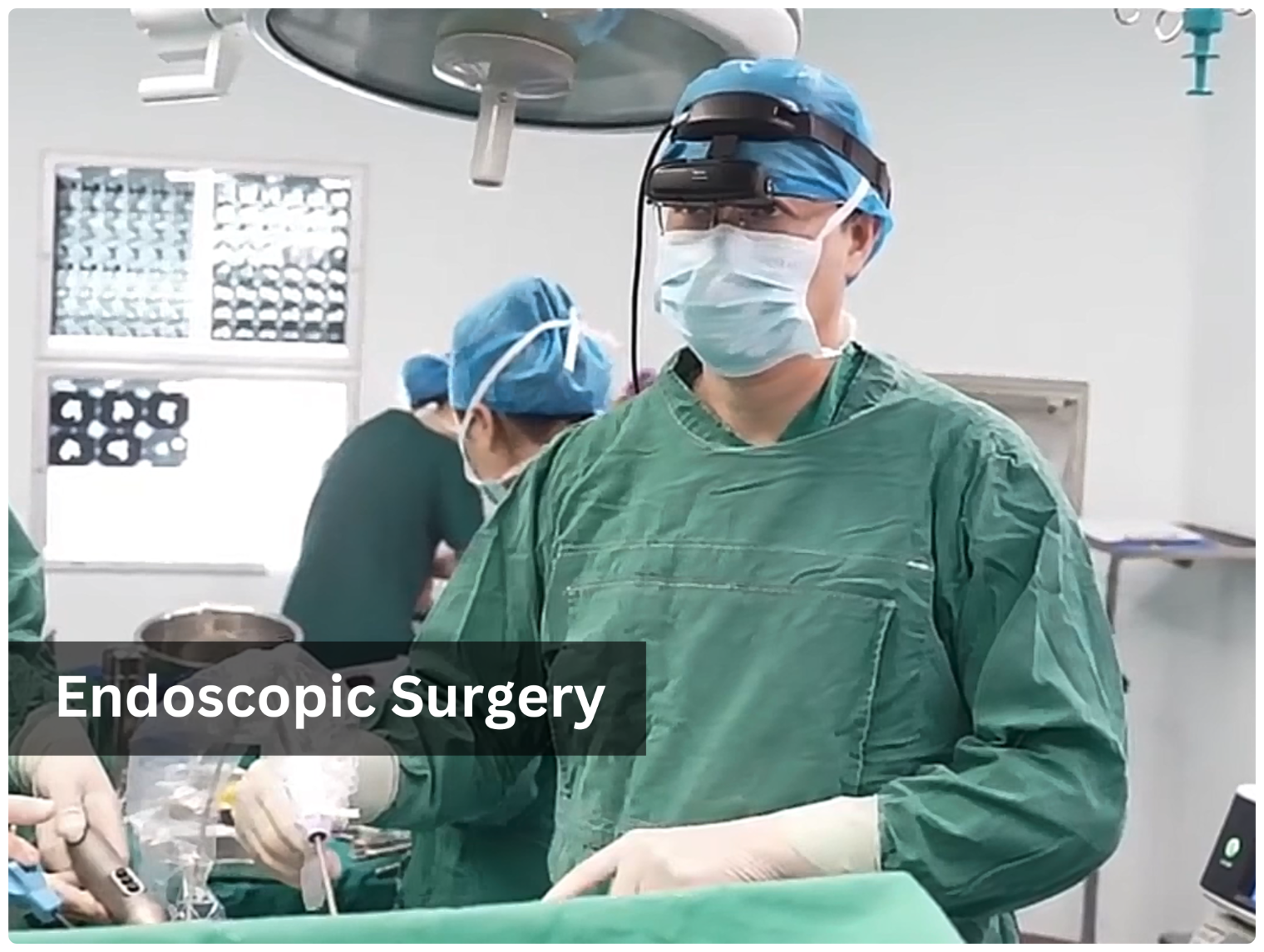
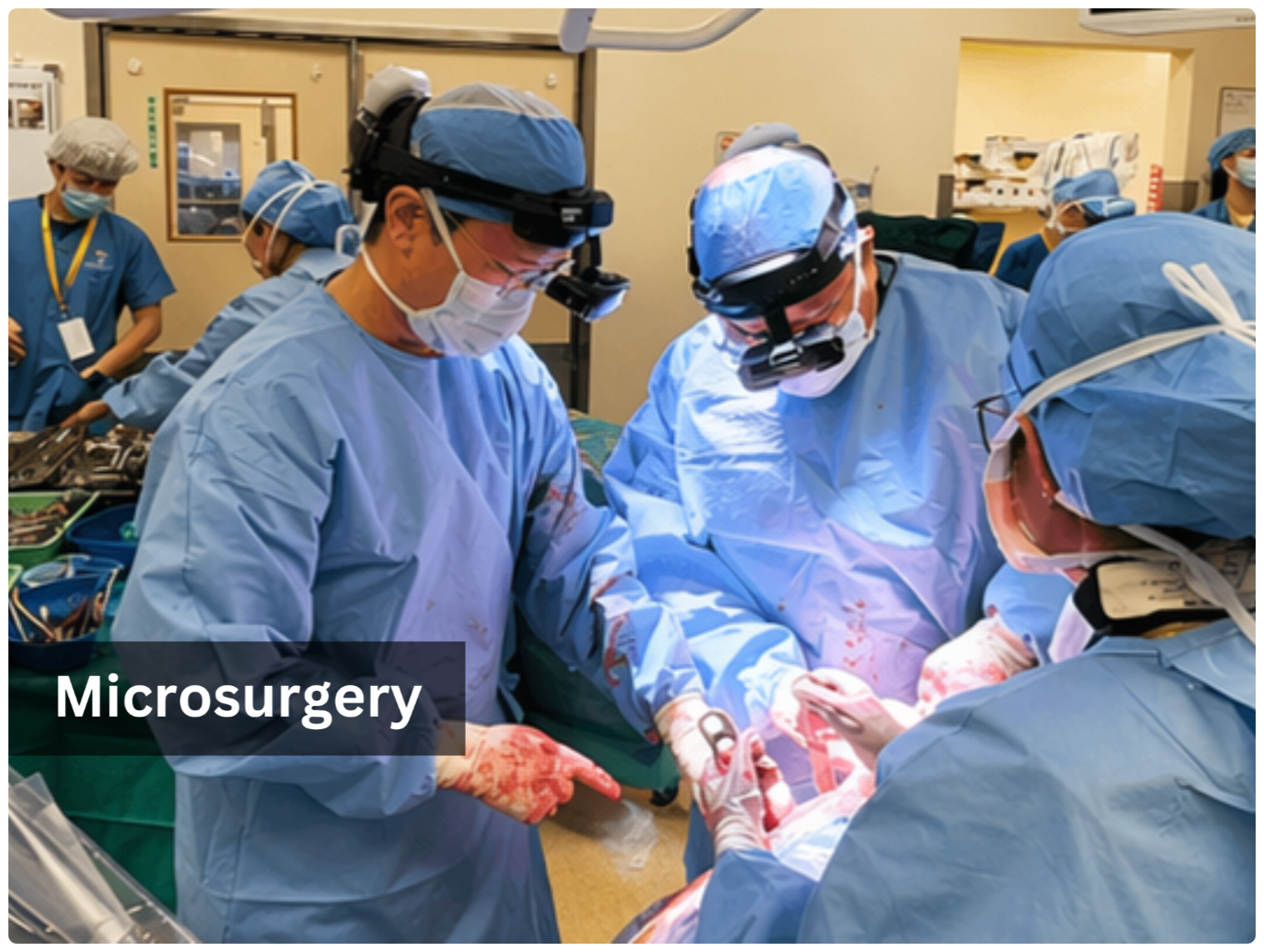
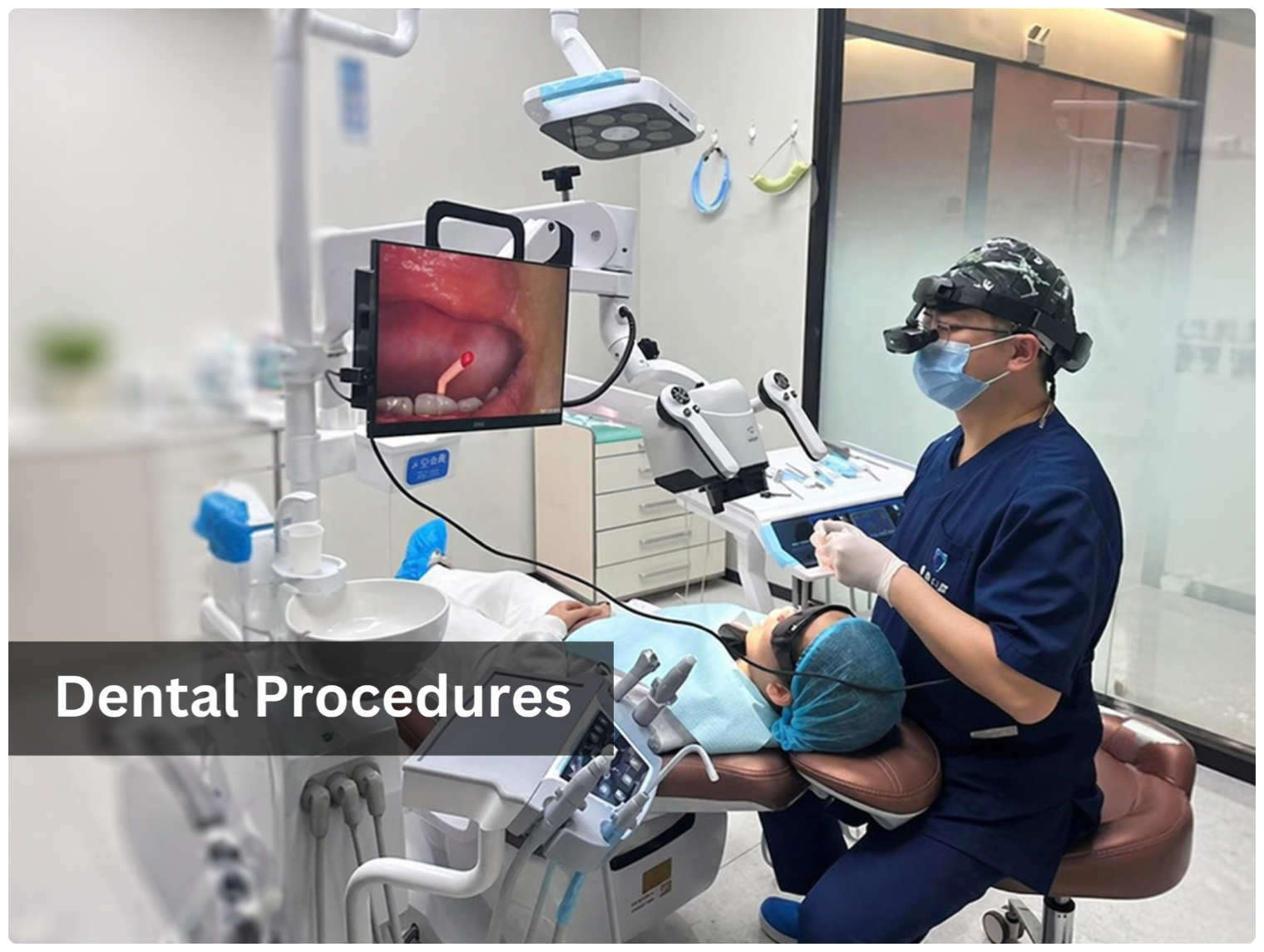
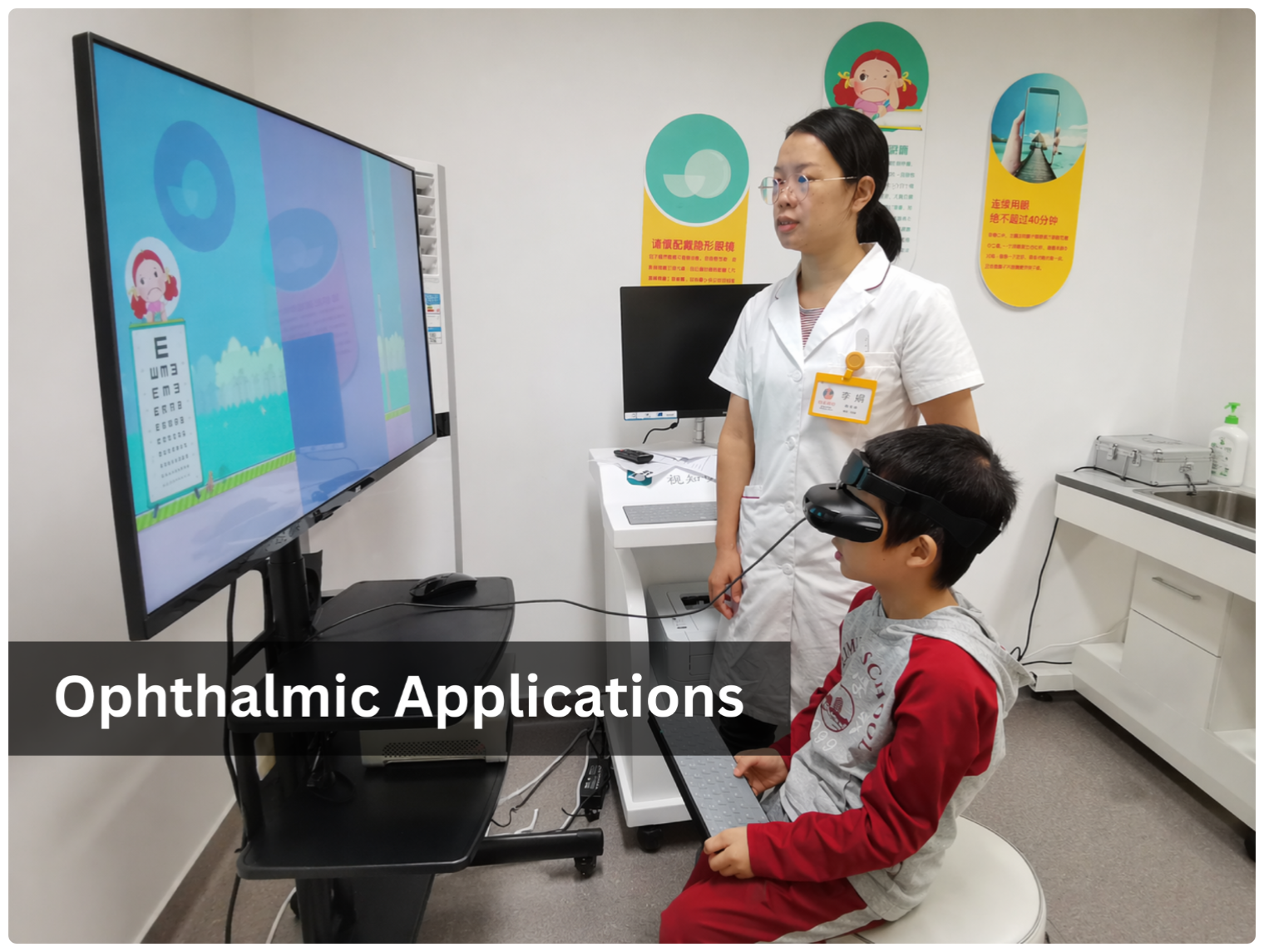
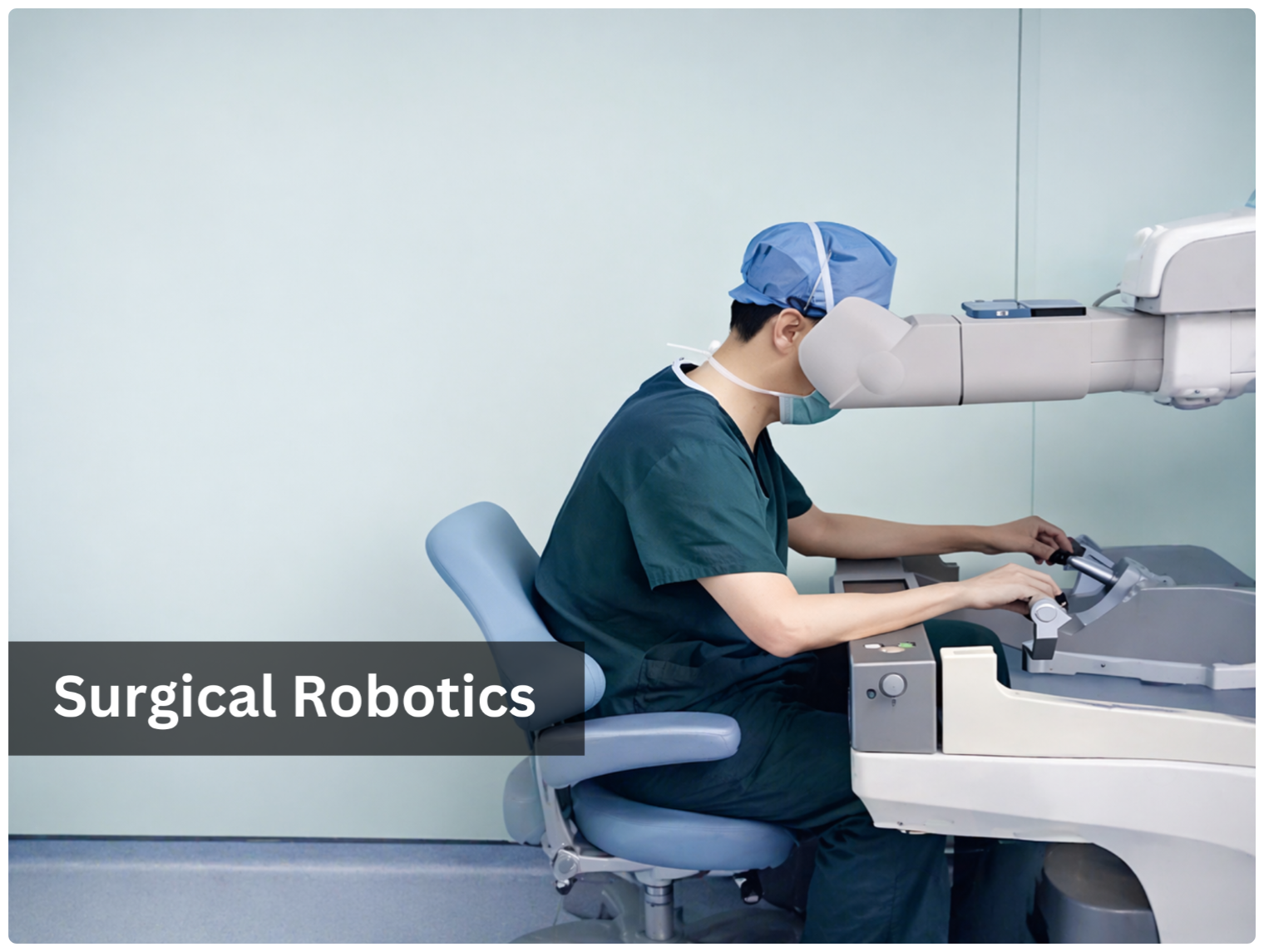
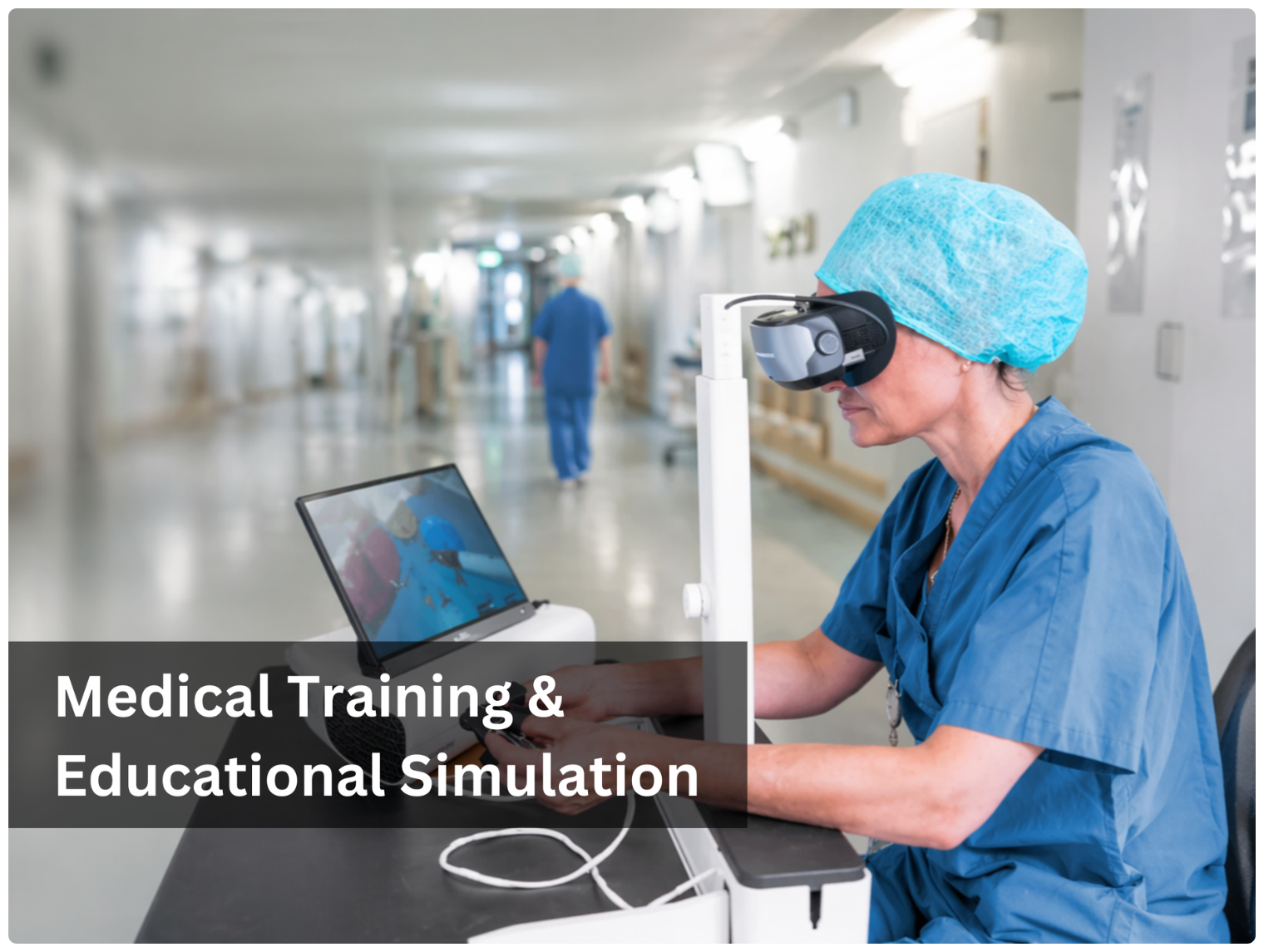
Medical Applications








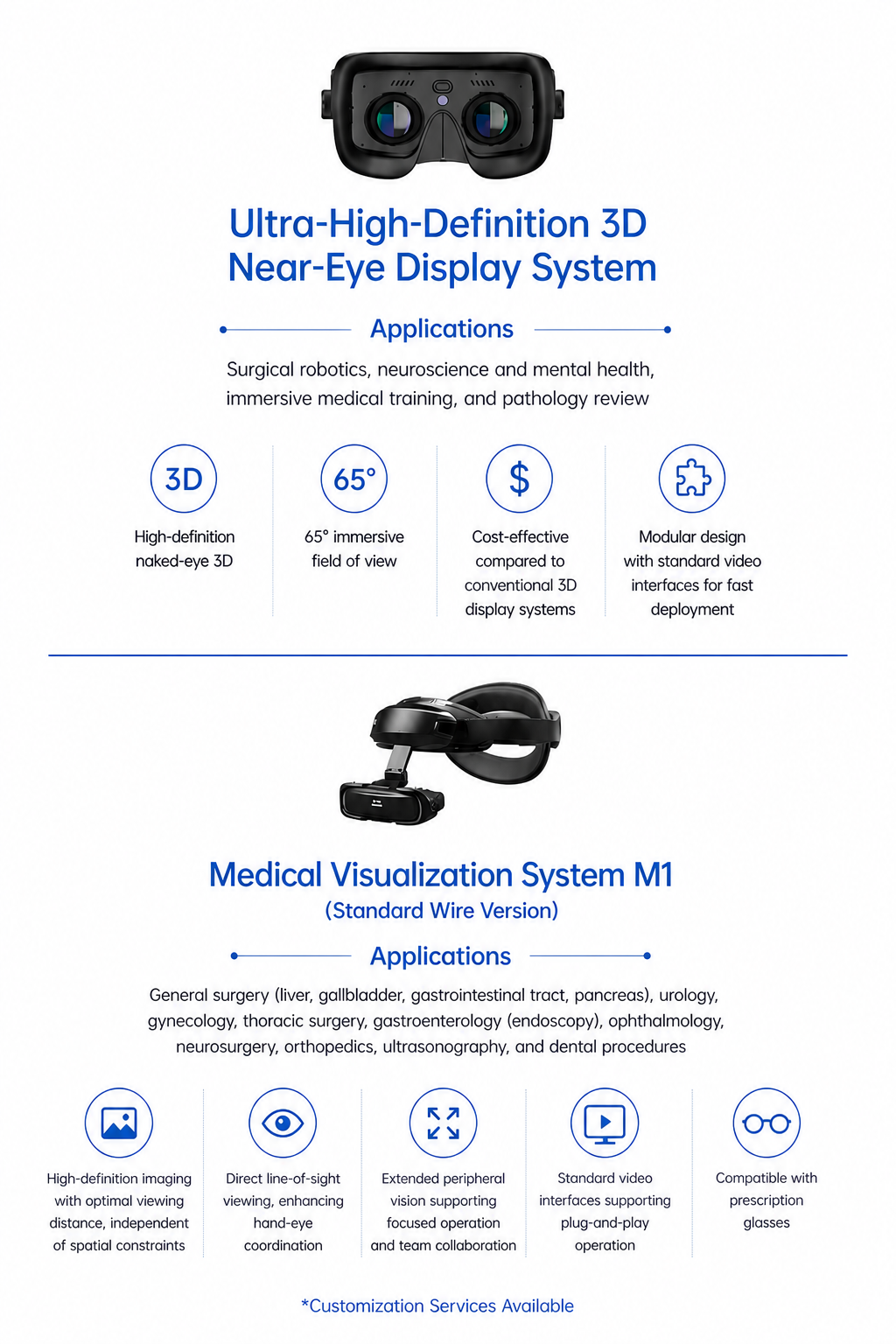
Representative Products

Product Acquisition & Collaboration

Standard Product Collaboration

Customized Development Collaboration
